



What's Happening?
The National Oceanic and Atmospheric Administration (NOAA), under the Department of Commerce, has awarded a $2.6 million contract to Niyam IT. This contract, identified as PIID 1305M226P0328, is for 'NEXRAD site analysis in support of spectrum management,
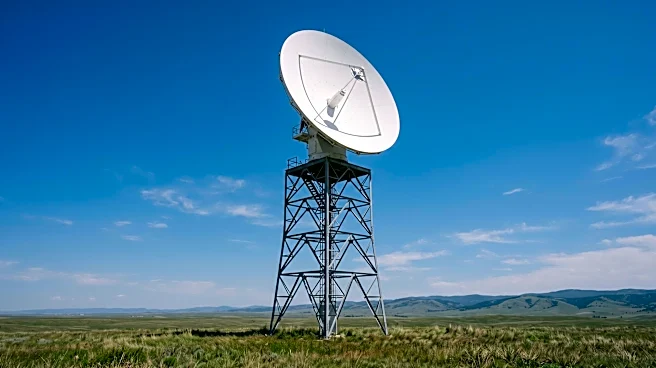
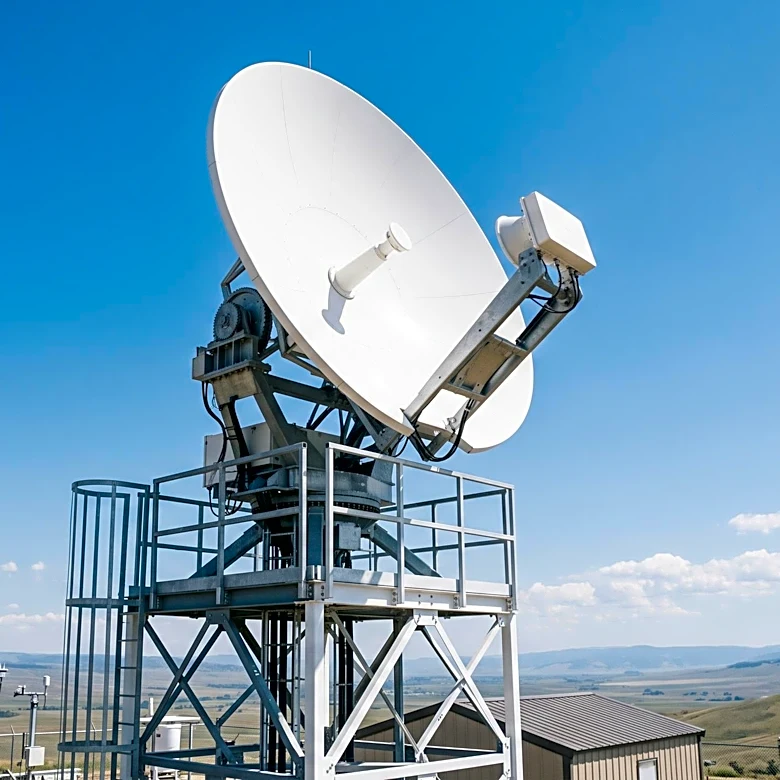
policy, and commercial cellular integration.' The work is scheduled from September 24, 2026, through September 23, 2027, and supports the Federal Weather Enterprise as part of NOAA’s 'Radar Next Program.' The integration focuses on the 2.69 to 2.9 GHz spectrum. This initiative involves the use of satellites, NEXRAD weather radar data, cellular tower data, aerosol data, artificial intelligence (AI), and machine learning (ML) for weather research and forecasting. NEXRAD, a network of 160 high-resolution Doppler radars operated by NOAA, the FAA, and the U.S. Air Force, transmits pulsed Radiofrequency/Microwave Radiation (RF/MWR) to measure atmospheric conditions, including wind motion, precipitation, storm structure, and aerosols. Cellular towers also utilize RF/MWR to provide real-time data for weather forecasting, detecting temperature, humidity, and aerosols, in addition to their communication functions. Atmospheric aerosols are tracked via satellites and ground instruments and are known to influence cloud formation and are used in weather monitoring and experimentation. The source notes that these activities are presented as tools for weather prediction, not explicitly as 'weather modification' or 'solar geoengineering.'
Why It's Important?
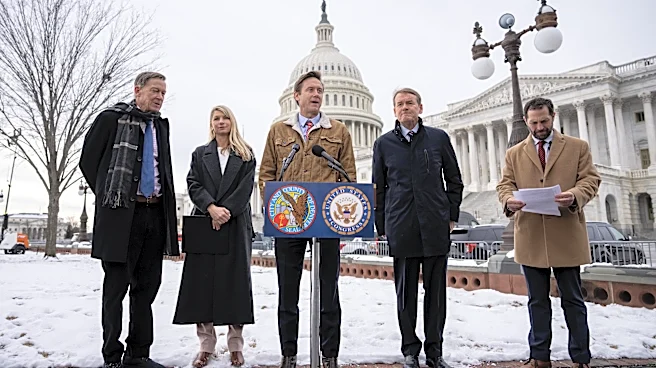
This contract signifies a significant step in modernizing and integrating U.S. weather forecasting infrastructure, potentially enhancing the accuracy and real-time capabilities of weather prediction. The integration of NEXRAD with commercial cellular networks and advanced AI/ML technologies could lead to more precise and timely warnings for severe weather events, benefiting public safety and various industries reliant on accurate weather data, such as agriculture, aviation, and logistics. However, the initiative also raises concerns regarding the potential adverse impacts of atmospheric 'weather research' and the lack of public consent for such experimentation. The use of pulsed Radiofrequency/Microwave Radiation (RF/MWR) and atmospheric aerosols is highlighted as a potential source of pollution, requiring scrutiny to protect biological life. The dual-use nature of this system, combining satellites, telecommunications, NEXRAD, aerosol observation, AI/ML, and data collection, creates a platform for real-time global surveillance, which could have implications for privacy and civil liberties. State policy proposals are beginning to address the infrastructure of weather modification due to these concerns, indicating a growing public and legislative interest in the oversight of such technologies.
What's Next?
The contract will run through September 2027, during which Niyam IT will conduct NEXRAD site analysis to support spectrum management and commercial cellular integration. This period will likely involve detailed technical work to ensure seamless operation and data exchange between the various components of the Federal Weather Enterprise. Concurrently, discussions around the potential adverse impacts of 'weather research' and the ethical implications of atmospheric experimentation are expected to continue. State policy proposals addressing weather modification infrastructure may advance, potentially leading to new regulations or oversight mechanisms. The ongoing development and deployment of these integrated systems will likely prompt further public and scientific debate regarding the balance between technological advancement in weather forecasting and environmental/health concerns related to RF/MWR and atmospheric aerosols. The 'Radar Next Program' will continue to evolve, with future budget estimates and priorities, such as those outlined in the proposed Weather Research Funding 2027-2031 and the NOAA Budget Estimates FY 2027, shaping its direction and scope.
Beyond the Headlines
The integration of advanced technologies for weather forecasting, while promising enhanced accuracy, touches upon deeper ethical and societal questions. The distinction between 'weather prediction' and 'weather modification' becomes increasingly blurred as technologies like atmospheric aerosols and RF/MWR are employed. This raises fundamental questions about human intervention in natural systems and the long-term ecological consequences. The concept of 'weather sovereignty' and the potential for unintended geopolitical implications could emerge as nations develop sophisticated atmospheric modification capabilities. Furthermore, the extensive data collection and surveillance capabilities inherent in such integrated systems could lead to debates about privacy, data security, and the potential for misuse. The public's right to informed consent regarding large-scale environmental experimentation is a critical ethical consideration. The ongoing scrutiny of RF/MWR and atmospheric aerosols as pollutants could also influence future environmental regulations and public health policies, potentially leading to new standards for technological deployment in the atmosphere.