





What's Happening?
A two-year survey in Singapore has concluded that the country possesses geothermal resource potential exceeding 60 times its current annual electricity consumption. Singapore, which presently consumes 60 terawatt-hours (TWh) of electricity annually, also
found that geothermal resources at shallower depths could potentially fulfill industrial heating and cooling requirements. Following these preliminary findings, Singapore's Energy Market Authority has commissioned a consortium, comprising state-owned Surbana Jurong and Canadian energy consulting firm GLJ, to conduct a feasibility study. This study will assess the viability of generating geothermal power from the newly identified resources, located several kilometers deep. The 15-month study is slated to begin by the end of 2026. Tan See Leng, Singapore’s Minister for Energy, Trade and Industry, stated that while the country is at the beginning of its journey and a decision on geothermal deployment is years away, this option is being seriously explored.
Why It's Important?
This discovery is significant for Singapore, a land-scarce nation with limited domestic renewable energy options. The potential for geothermal energy offers a pathway to diversify its energy mix and reduce reliance on fossil fuels, contributing to global decarbonization efforts. For the U.S. and other nations, Singapore's exploration of geothermal energy provides a case study in how countries with geographical constraints can pursue alternative energy sources. The involvement of a Canadian energy consulting firm, GLJ, highlights international collaboration in renewable energy development, potentially opening doors for U.S. companies with expertise in geothermal technology. The successful development of geothermal power in Singapore could also influence investment and research into similar energy solutions in other urbanized or land-constrained regions globally, impacting the broader renewable energy market and technological advancements.
What's Next?
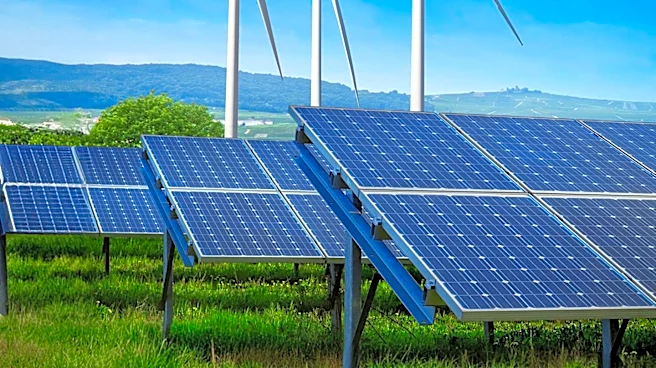
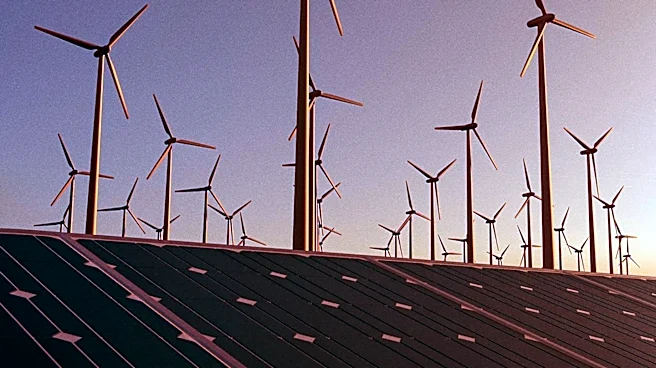
The immediate next step is the 15-month feasibility study, which will provide a more detailed understanding of the technical and economic viability of geothermal power generation in Singapore. This study will be crucial in determining whether the country proceeds with large-scale deployment. Concurrently, Singapore is also advancing its solar energy initiatives, raising its 2035 solar target to 4 gigawatt peak (GWp) and exploring unconventional deployment spaces like solar carports and building-integrated photovoltaics. However, even with these efforts, solar is projected to meet only about 10% of the projected electricity demand by 2050, underscoring the need for baseload, low-carbon alternatives like geothermal. The government is also investing S$800 million (US$624 million) in developing emerging low-carbon technologies, including a pilot project for higher-efficiency tandem perovskite-silicon panels. These combined efforts indicate a multi-pronged approach to achieving energy security and decarbonization.
Beyond the Headlines
The pursuit of geothermal energy by Singapore reflects a global trend among nations to secure sustainable and reliable energy sources amidst climate change concerns and geopolitical uncertainties. This move highlights the increasing importance of energy independence and the strategic value of diverse energy portfolios. The challenges Singapore faces—being land-scarce and heavily reliant on gas—are common to many developed economies, making its energy transition strategies particularly relevant. The long-term implications could include significant advancements in geothermal drilling and extraction technologies, especially for urban environments, and a shift in how countries perceive and utilize their geological resources. This initiative also underscores the critical role of government-led research and international partnerships in driving innovation and achieving ambitious climate goals.