





What's Happening?
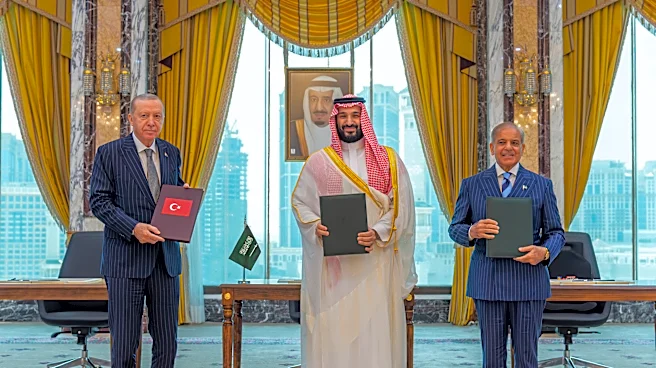
Saudi Arabia, Turkey, and Pakistan have signed a mutual defense treaty known as the Mecca Pact, which could have significant geopolitical implications. The pact, which includes a NATO-style Article 5 clause, aligns these countries in a strategic partnership
that may influence regional security dynamics. The agreement is seen as a response to perceived instability in the region and a move to counterbalance Iran's influence. This development is likely to impact India and Israel, prompting them to strengthen their own strategic partnership in response to the new alliance.
Why It's Important?
The Mecca Pact represents a major shift in Middle Eastern geopolitics, potentially altering alliances and power balances in the region. For India and Israel, the pact poses both challenges and opportunities. It may drive the two countries closer together as they seek to counter the influence of the new alliance. The pact also complicates efforts towards Saudi-Israel normalization, as Turkey and Pakistan have historically been hostile to Israel. The economic implications are significant as well, with Saudi Arabia's central role in the India-Middle East-Europe Economic Corridor potentially affected by its closer ties with Turkey.
What's Next?
India and Israel are likely to enhance their strategic and defense cooperation in response to the Mecca Pact. This could involve increased military collaboration, intelligence sharing, and joint economic initiatives. The new alliance may also prompt other regional players to reassess their positions and alliances. The path towards Saudi-Israel normalization may face additional hurdles, with the Mecca Pact potentially influencing Saudi Arabia's foreign policy decisions. Observers will be watching closely to see how this new geopolitical landscape evolves and what it means for regional stability.