


What's Happening?
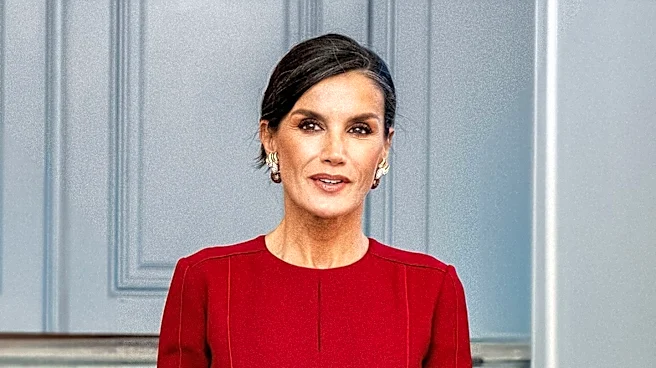
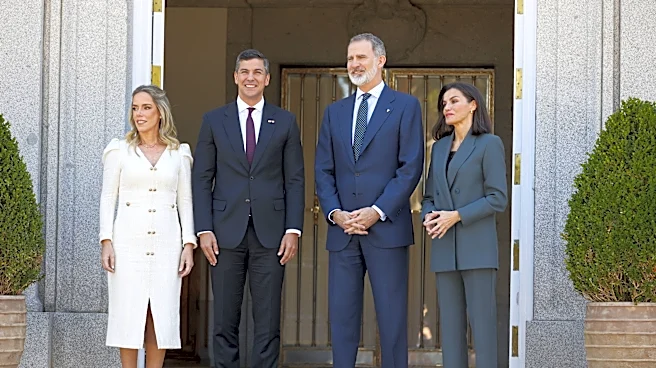
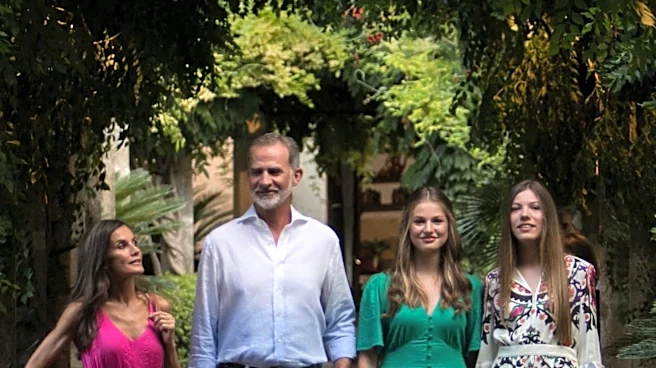
King Felipe VI and Queen Letizia of Spain attended a funeral mass at Toledo Cathedral on November 10, 2026, for the victims of a deadly train crash. The accident, which occurred on October 28, 2026, in Urda, a town near Toledo, involved two high-speed
passenger trains colliding, resulting in 69 fatalities and numerous injuries. Archbishop Francisco Cerro Chaves officiated the service, emphasizing unity and hope amidst the tragedy. During the ceremony, 69 candles were lit, each representing a victim, placed before the historic Most Holy Christ of the Vera Cruz of Urda sculpture, which was brought to the cathedral for the first time since 1596, excluding a restoration period. The royal couple had previously expressed their condolences and visited victims in a local hospital following the incident.
Why It's Important?
This event underscores the profound impact of large-scale tragedies on national sentiment and the role of public figures in providing solace and demonstrating solidarity. The presence of the King and Queen at the memorial service highlights the monarchy's function as a symbol of national unity and empathy during times of crisis. Their engagement, from initial condolences to hospital visits and attending the funeral, serves to acknowledge the collective grief of the nation and offer support to affected families. The Archbishop's sermon, focusing on fraternity and shared responsibility, also reflects broader societal values and the community's effort to find meaning and resilience in the face of immense loss. The rare appearance of the historic religious artifact further emphasizes the cultural and spiritual significance of the event for the Spanish people.
What's Next?
In the immediate aftermath of the memorial, the focus will likely shift towards ongoing investigations into the cause of the train crash to prevent future occurrences. Authorities will continue to provide support to the injured and the families of the deceased, which may include long-term psychological and financial assistance. Public discourse may also center on railway safety protocols and infrastructure improvements. The royal family will likely continue to monitor the situation and offer support as needed, reinforcing their role as national figures of comfort. The community of Urda and Toledo will embark on a period of healing and remembrance, with potential local initiatives to honor the victims and support those affected by the tragedy.
Beyond the Headlines
The Toledo train crash and the subsequent national mourning reveal deeper societal dynamics concerning collective grief and resilience. The bringing of the Most Holy Christ of the Vera Cruz of Urda to the cathedral, a rare historical event, signifies the profound intertwining of faith, culture, and national identity in Spain, especially during moments of crisis. This act provides a powerful symbol of shared heritage and spiritual solace for a grieving nation. Furthermore, the emphasis on unity and fraternity by religious and royal figures points to a societal need for cohesion and mutual support when confronted with overwhelming loss. The tragedy may also prompt a broader re-evaluation of public safety standards and emergency response mechanisms, potentially leading to long-term policy changes aimed at enhancing citizen protection and preparedness for future disasters.