


What's Happening?
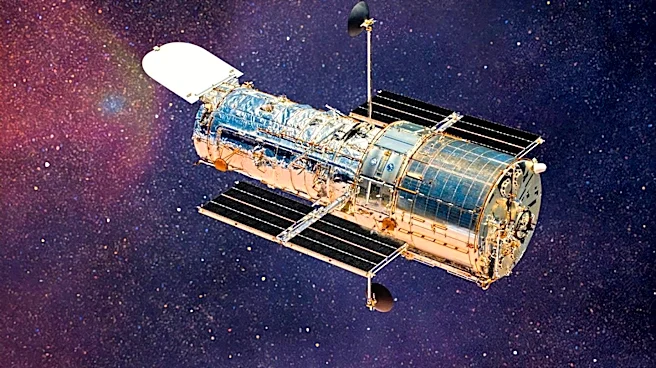
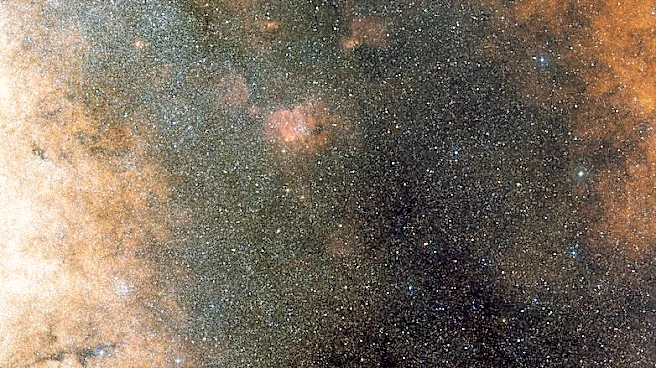
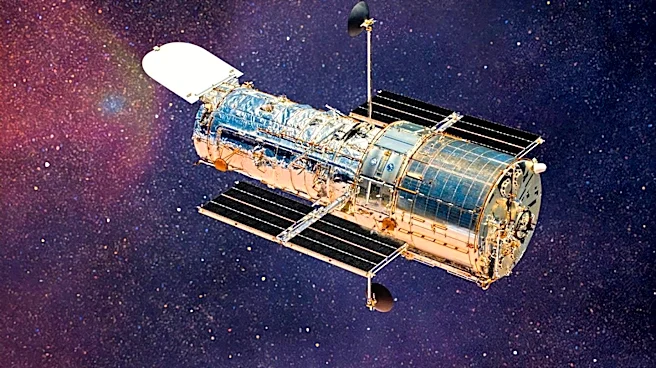
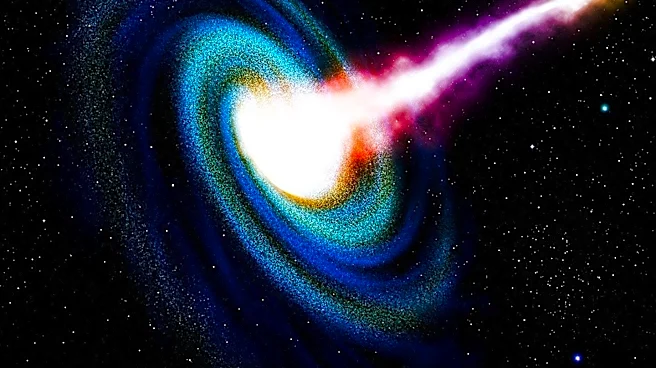
The Hubble Space Telescope has provided new evidence of a previously unknown galactic merger that occurred early in the Milky Way's history, approximately 11.8 billion years ago. This discovery, detailed by lead author Davide Massari of the Astrophysics
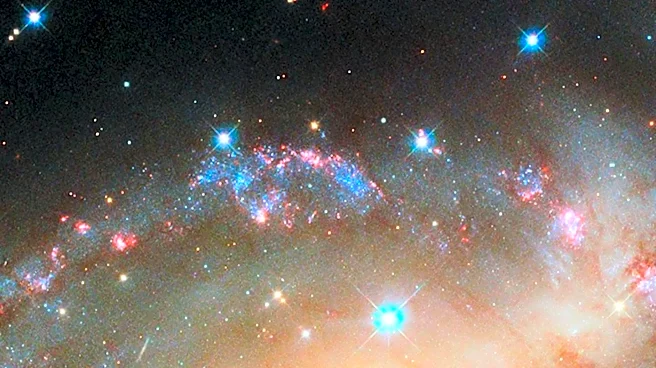
and Space Science Observatory of Bologna, Italy, and his team, indicates that our galaxy absorbed a dwarf galaxy named Low-energy-Kraken-Heracles (LKH) just two billion years after the Big Bang. The LKH merger contributed a mass equivalent to 500 million times that of our Sun to the young Milky Way. Researchers utilized Hubble data to study 39 different globular clusters, which are dense collections of ancient stars. By analyzing the age and chemical composition (metallicity) of these clusters, they identified a third population of clusters distinct from those native to the Milky Way and those absorbed during the Gaia-Sausage-Enceladus merger 10 billion years ago. This third group, older than the Gaia-Sausage-Enceladus clusters but younger than the Milky Way's native clusters, points to an earlier, separate galactic assimilation.
Why It's Important?
This finding significantly extends our understanding of the Milky Way's formation and evolution, pushing back the timeline of its growth through galactic cannibalism by 1.8 billion years. Previously, astronomers debated whether the early Milky Way grew primarily from internal gas clouds or through external mergers. The identification of the LKH merger demonstrates that external galactic building blocks were crucial to the Milky Way's foundation from its earliest stages. This challenges the notion of a quiet, self-contained infant galaxy and reinforces the idea that galactic mergers have been a continuous and fundamental process in shaping our cosmic home. Understanding these ancient mergers helps scientists reconstruct the complex history of galaxy formation and provides insights into the distribution of stars, gas, and dark matter within the Milky Way today. It also offers a deeper context for future studies on galactic dynamics and the broader evolution of the universe.
What's Next?
Future research will likely focus on further characterizing the Low-energy-Kraken-Heracles dwarf galaxy and its impact on the Milky Way's structure. Scientists may use advanced observational techniques and simulations to model the merger event more precisely, aiming to understand how it influenced the distribution of stars and dark matter in the nascent Milky Way. Continued analysis of globular clusters, potentially with next-generation telescopes, could reveal even earlier or smaller merger events, providing a more complete picture of our galaxy's accretion history. The insights gained from this discovery will also inform studies of other galaxies, helping to establish a more universal understanding of galactic evolution and the role of mergers in shaping cosmic structures. Astronomers will continue to refine their models of galaxy formation, incorporating these new findings to better predict and interpret observations of distant galaxies.
Beyond the Headlines
The discovery of the Low-energy-Kraken-Heracles merger highlights the ongoing 'cosmic detective work' involved in understanding the universe's vast timescales and complex processes. Over billions of years, the stellar motions within galaxies become perturbed, erasing the obvious shapes of devoured galaxies, making such discoveries challenging. The use of globular clusters as 'cosmic archaeological sites' underscores the ingenuity of astronomical research in piecing together the past from faint, ancient signals. This research also subtly touches upon the concept of 'galactic cannibalism,' a powerful metaphor for the growth of large galaxies by absorbing smaller ones. It emphasizes that the Milky Way, our seemingly stable home, is the product of a dynamic and often violent history of cosmic interactions, constantly evolving through the assimilation of other celestial bodies. This perspective enriches our appreciation for the dynamic nature of the cosmos and our place within it.