


What's Happening?
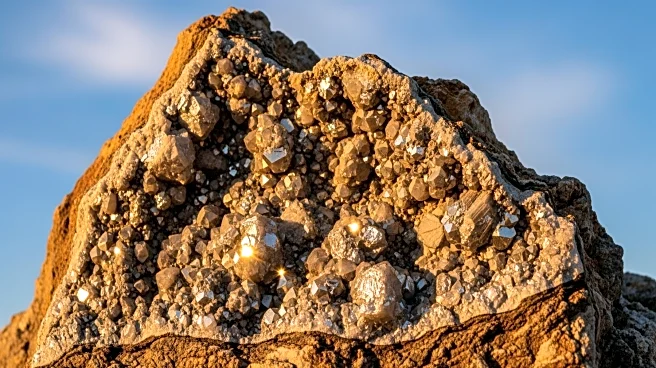
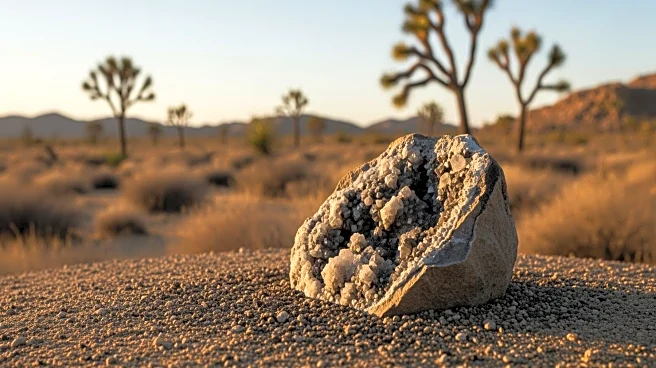
An Australian mining company, Dateline Resources Ltd, has announced plans to explore and potentially extract heavy rare earth elements (HREEs) near Joshua Tree National Park in California. The proposed site, located in the Pinto mountains, covers approximately
32 square miles of desert land. This area is considered critical habitat for the endangered Mojave desert tortoise. Environmentalists, including Brendan Cummings from the Center for Biological Diversity, have expressed concerns that the mining activities could harm the local ecosystem, including springs and groundwater reservoirs, and alter the landscape permanently. U.S. Representative Jared Huffman has also raised alarms, citing the company's previous controversial mining activities in the Mojave National Preserve. The project is still in the exploration phase, with early samples showing promising concentrations of HREEs, but further studies are required.
Why It's Important?
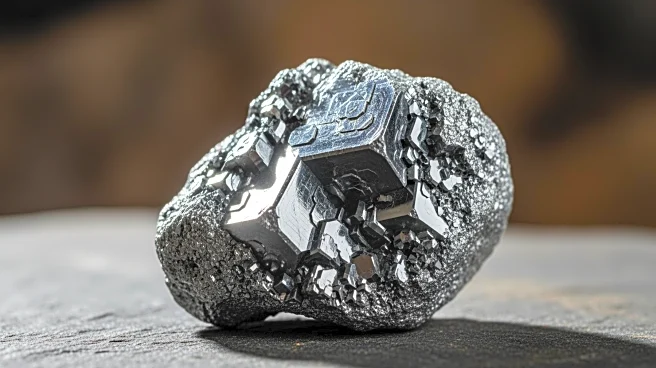
The mining project near Joshua Tree National Park is significant due to its potential impact on the environment and the local ecosystem. Rare earth elements are crucial for manufacturing high-tech products, including smartphones, electric vehicle motors, and missile guidance systems. Currently, China dominates the global HREE market, which has prompted U.S. efforts to develop a domestic supply chain. However, the environmental risks associated with mining in sensitive areas have sparked debate over balancing economic interests with conservation efforts. The project could affect public access to the park and threaten the habitat of endangered species, raising ethical and legal questions about resource extraction in protected areas.
What's Next?
The future of the mining project remains uncertain as it is still in the exploration phase. Dateline Resources Ltd has yet to release a technical report on the area's HREE concentrations, which is standard procedure for such projects. Environmental groups and political leaders may continue to oppose the project, potentially leading to legal challenges or regulatory scrutiny. The company will need to conduct further studies to assess the feasibility and environmental impact of large-scale mining operations. Stakeholders, including conservationists and policymakers, will likely engage in discussions to address the environmental concerns and explore alternative solutions for sourcing rare earth elements.
Beyond the Headlines
The controversy surrounding the mining project highlights broader issues related to resource extraction in environmentally sensitive areas. It raises questions about the ethical implications of prioritizing economic gains over environmental preservation. The project could set a precedent for future mining activities near protected areas, influencing policy decisions and conservation strategies. Additionally, the reliance on rare earth elements underscores the need for sustainable practices and technological innovations to reduce environmental impact. The debate may also prompt discussions on international trade relations, particularly with China, and the strategic importance of developing domestic supply chains for critical minerals.