







What's Happening?
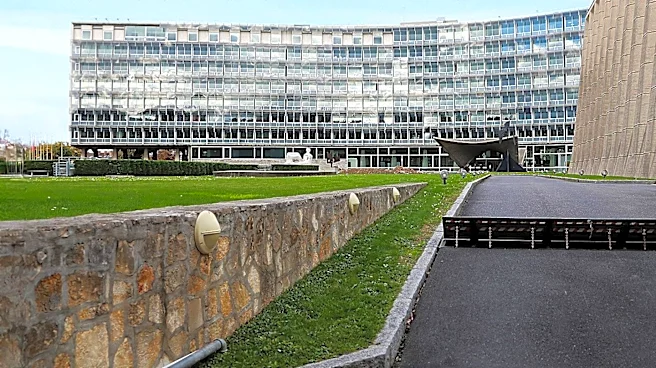
The United Nations Educational, Scientific and Cultural Organization (UNESCO) has initiated a High-Level Dialogue on Combating Racism in and through Education at its headquarters in Paris. This event brings together policymakers, experts, institutional
partners, and young people to foster a world free from racism. UNESCO emphasizes that racism, though historically constructed and perpetuated through systems of domination, continues to undermine human rights and universal principles. The organization highlights education's dual capacity: it can dismantle prejudice and foster critical thinking, but it can also perpetuate historical silences and normalize exclusion. Therefore, UNESCO aims to address how discrimination operates within education systems, including policies, curricula, textbooks, and teaching practices, while empowering educators and learners to challenge discriminatory narratives. In partnership with the European Commission, UNESCO is implementing a two-year project to strengthen the ability of education systems across the EU to respond more effectively to racism, with the OSCE Office for Democratic Institutions and Human Rights (ODIHR) also participating in these efforts.
Why It's Important?
This initiative is crucial for the United States and the global community as it addresses the pervasive issue of racism through the foundational lens of education. By examining and reforming educational systems, UNESCO's efforts could provide a framework for U.S. educational institutions to critically evaluate their own curricula and teaching practices for inherent biases or omissions. The project's focus on empowering educators and learners to challenge discriminatory narratives aligns with ongoing discussions in the U.S. about diversity, equity, and inclusion in schools. Success in this international endeavor could offer best practices and models for U.S. policymakers and educators seeking to create more inclusive and equitable learning environments, potentially influencing federal and state-level educational policies aimed at combating systemic racism. Conversely, a failure to effectively address these issues globally could exacerbate social divisions and hinder progress towards a more just society, impacting the U.S. by perpetuating inequalities that affect various communities.
What's Next?
UNESCO, in collaboration with the European Commission and the OSCE Office for Democratic Institutions and Human Rights (ODIHR), will continue its two-year project aimed at strengthening education systems' responses to racism across the EU. This project will involve ongoing efforts to analyze and reform educational policies, curricula, textbooks, and teaching practices. The insights and methodologies developed through this dialogue and project are expected to inform future international and national strategies for combating racism through education. UNESCO will likely publish findings and recommendations, which could serve as a guide for member states, including the U.S., in developing their own anti-racism educational initiatives. The organization will also continue to facilitate dialogues and partnerships to ensure sustained global efforts against racism, with a focus on empowering educational stakeholders to foster inclusive environments.
Beyond the Headlines
The initiative delves into the ethical and cultural dimensions of education, recognizing that educational systems are not neutral but can either perpetuate or dismantle societal biases. By scrutinizing whose histories are taught and whose voices are absent, UNESCO challenges nations, including the U.S., to confront the long-term implications of historical silences and normalized exclusion in their educational narratives. This effort could trigger a deeper re-evaluation of national identities and historical interpretations within educational contexts, potentially leading to more comprehensive and inclusive curricula. The emphasis on empowering learners to challenge discriminatory narratives fosters critical thinking and civic engagement, which are vital for democratic societies. Ultimately, this dialogue aims to cultivate a global citizenry that is more aware of and actively committed to combating racism, fostering a long-term shift towards greater social justice and human rights.