






What's Happening?
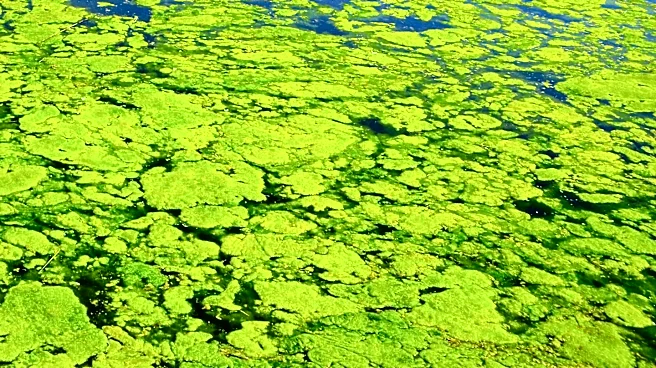
Each summer, western Lake Erie experiences significant green or turquoise blooms caused by cyanobacteria, primarily Microcystis. These blooms produce microcystins, toxins that can harm the liver and sicken people, pets, and wildlife. The intensity of
these toxins varies across the lake, making visual assessment of water safety unreliable. Lake Erie's shallow depth contributes to its rapid warming, creating ideal conditions for these blooms. However, the primary driver is excess phosphorus originating from the surrounding land. Over the past decade, federal and state agencies have invested over $400 million in conservation efforts to reduce phosphorus runoff. Despite these efforts, the blooms persist because phosphorus stored in soils, streambeds, and drainage systems continues to flow into the lake, particularly via the Maumee River, which accounts for nearly half of the total phosphorus load in the western basin. Nonpoint sources, largely agricultural fertilizer and manure, contribute approximately 90% of this phosphorus.
Why It's Important?
The recurring harmful algal blooms (HABs) in Lake Erie have significant environmental, economic, and public health implications for the U.S. The toxins produced by Microcystis pose direct health risks, leading to symptoms ranging from stomach aches and rashes to potential liver and kidney damage from contaminated water. This impacts recreational activities like swimming and fishing, affecting local tourism and economies dependent on the lake. In 2014, Toledo issued a 'do not drink or boil' advisory for nearly 500,000 customers due to elevated microcystin levels in treated drinking water, demonstrating the severe public utility challenges. Environmentally, decomposing bloom material depletes dissolved oxygen, creating hypoxic zones that can suffocate fish and disrupt the aquatic ecosystem. The persistence of these blooms, despite substantial investment in reduction efforts, highlights the complex challenge of managing agricultural runoff and its far-reaching consequences on vital freshwater resources.
What's Next?
Efforts to mitigate Lake Erie's algal blooms will likely continue to focus on reducing phosphorus inputs, particularly from agricultural nonpoint sources. This includes ongoing promotion of conservation practices among farmers, such as utilizing buffer strips and restricting fertilizer application on frozen or snow-covered soil. Research will likely continue into understanding the complex dynamics of phosphorus transport and storage in the watershed to develop more effective management strategies. Monitoring programs will remain crucial for tracking bloom development, toxin levels, and issuing public advisories to protect human and animal health. Water treatment facilities will need to maintain advanced capabilities to remove toxins from drinking water. Additionally, there may be further exploration of innovative technologies or ecological approaches, though the source indicates that once a bloom develops, no practical method can remove it across the entire lake, reinforcing the emphasis on prevention.
Beyond the Headlines
The persistent issue of Lake Erie's algal blooms underscores broader challenges in environmental policy, agricultural practices, and climate change. The difficulty in controlling nonpoint source pollution from agriculture highlights the tension between economic productivity and ecological preservation, often involving complex negotiations between government agencies, farmers, and environmental groups. The problem also points to the long-term legacy of nutrient loading, where phosphorus accumulated over decades continues to fuel blooms, even with current reduction efforts. This situation raises questions about the effectiveness of current regulatory frameworks and the need for more integrated watershed management. Furthermore, as climate change contributes to warmer water temperatures, the conditions for HABs are likely to become more favorable, potentially exacerbating the problem and requiring even more aggressive and adaptive management strategies. The Lake Erie case serves as a critical example of how interconnected human activities and natural systems are, and the profound impact of one on the other.