
What's Happening?
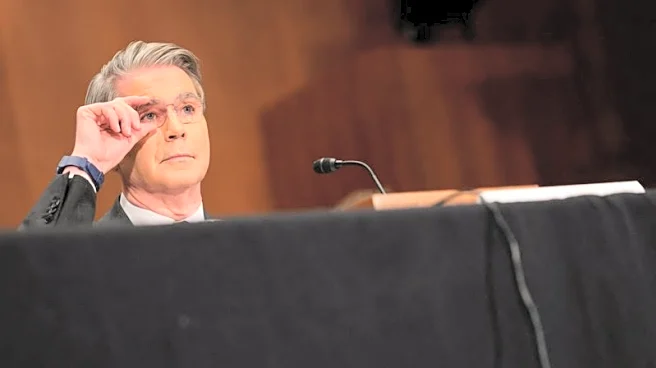
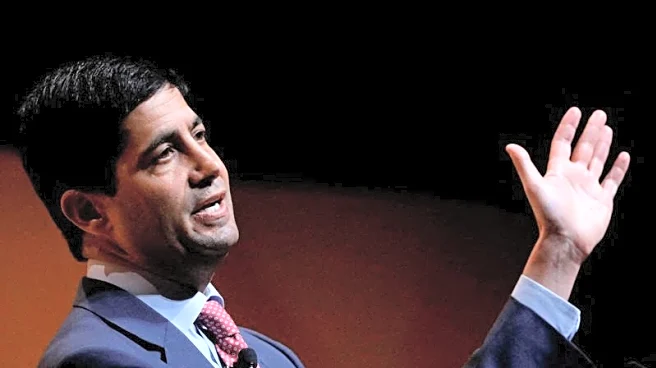
President Trump, alongside Treasury Secretary Scott Bessent, is set to resume interviews for the next Federal Reserve chair, starting with former Fed Governor Kevin Warsh. This process, which had been temporarily halted, is crucial as it determines the successor
to current Chair Jerome Powell, whose term ends in May. The selection process, which began in the summer, includes candidates like Kevin Hassett, director of the National Economic Council, and other notable figures such as Christopher Waller, Michelle Bowman, and Rick Rieder. Trump's decision is closely watched by markets, especially as there are concerns that Hassett might align too closely with Trump's preference for lower interest rates, potentially disregarding inflation risks. The Federal Reserve is expected to lower interest rates for the third time this year, with Powell likely to adopt a cautious approach regarding future rate cuts.
Why It's Important?
The selection of the next Federal Reserve chair is pivotal for U.S. economic policy, particularly in the context of interest rate management. President Trump's preference for a lower-rate regime could significantly impact monetary policy, influencing inflation and employment levels. Markets are wary of a potential candidate like Hassett, who might prioritize Trump's economic agenda over traditional Fed independence. This decision could affect investor confidence, particularly in fixed income markets, and shape the economic landscape by influencing borrowing costs, consumer spending, and overall economic growth. The outcome of these interviews will signal the administration's economic priorities and its approach to balancing growth with inflation control.
What's Next?
Following the interviews, President Trump is expected to make a decision on the new Fed chair, which will be closely scrutinized by financial markets and policymakers. The Federal Reserve's upcoming rate decision and Powell's subsequent press conference will provide further insights into the central bank's future policy direction. A hawkish stance from Powell could lead to tensions with the administration, which favors more aggressive rate cuts. The final selection of the Fed chair will also be a litmus test for the administration's commitment to maintaining the Fed's independence versus aligning it more closely with its economic policies.