





What's Happening?
A new episode of the 'Confidently Wrong' podcast focuses on the state of public education in Mexico, following the release of international standardized testing results from PISA for 15-year-olds. The results were described as troubling globally, but
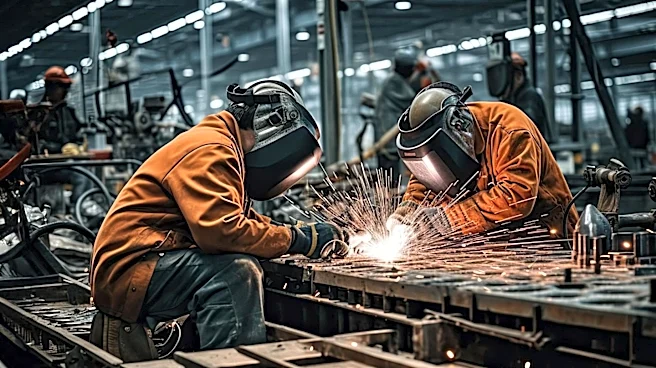
particularly dire for Mexico, where scores continued to deteriorate across the board. According to the podcast, nearly half of Mexican 15-year-olds cannot read at the most basic level, meaning they lack the foundational literacy skills necessary for learning. This issue is highlighted as a significant concern given an economy that increasingly demands knowledge of AI and robotics for jobs that were once entry-level manufacturing positions. The podcast episode, hosted by Travis Bembenek, CEO of Mexico News Daily, delves into the problems and implications of Mexico's public education system.
Why It's Important?
While the source focuses on Mexico, the implications for the U.S. are significant due to geographical proximity, economic ties, and shared challenges in education and workforce development. A struggling education system in Mexico could lead to a less skilled workforce, potentially impacting cross-border economic collaborations and the competitiveness of the North American region. Furthermore, the increasing demand for AI and robotics knowledge in entry-level jobs, a trend also observed in the U.S., underscores a global shift in labor markets. If a neighboring country's education system fails to prepare its youth for these changes, it could create broader economic and social challenges that indirectly affect U.S. interests, including migration patterns and trade relationships. The PISA results serve as a stark reminder of the universal need for robust educational systems that adapt to evolving technological demands.
What's Next?
The podcast episode aims to break down the problems and implications of the public education system in Mexico, building on a deep-dive report by Mexico News Daily into key metrics across the educational spectrum. The discussion will likely explore potential reforms or interventions needed to address the severe literacy deficits and prepare students for a future economy driven by advanced technologies. While the source does not specify immediate next steps for policy changes, the act of publicly discussing these troubling results through a podcast and detailed reports suggests an effort to raise awareness and prompt action. The focus on the inability of nearly half of 15-year-olds to read at a basic level indicates a foundational crisis that will require comprehensive and sustained efforts to overcome, potentially involving international collaboration or educational aid.
Beyond the Headlines
The deeper implication of Mexico's educational crisis, as highlighted by the podcast, is the potential for a widening skills gap that could exacerbate social inequalities and hinder national development. The inability of a significant portion of the youth to read at a basic level suggests a systemic failure that will have long-term consequences on economic productivity, innovation, and social mobility. This situation also raises ethical questions about equitable access to quality education in an increasingly technology-driven world. The contrast between the positive impression of private education in Mexico and the dire state of public education points to a two-tiered system that could further entrench disparities. For the U.S., this could mean a less stable and prosperous neighbor, potentially leading to increased pressures on shared borders and resources, and highlighting the interconnectedness of educational outcomes across nations.