
What's Happening?
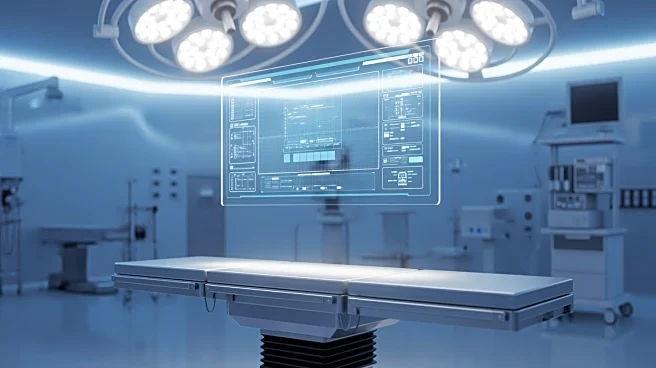
Hospitals are increasingly integrating advanced visualization technologies in operating rooms (ORs) to improve surgical precision and collaboration. Modern ORs now feature high-resolution, ultra-responsive
displays that are tightly integrated with imaging, data, and robotic systems. These technologies allow surgeons to distinguish tissue boundaries and identify microstructures with unprecedented precision. Biomedical engineers play a crucial role in managing these technologies, ensuring seamless interoperability and tailoring solutions to meet the specific demands of each OR. The use of Ultra High Definition 4K and 8K monitors, augmented reality, and AI-guided procedures are becoming standard, enhancing the overall surgical performance.
Why It's Important?
The integration of advanced visualization technologies in ORs is significant as it directly impacts surgical outcomes and patient safety. By providing clearer and more accurate visual information, these technologies reduce the risk of errors during surgery. The role of biomedical engineers is expanding as they are essential in implementing and maintaining these complex systems. This development is part of a broader digital transformation in healthcare, where real-time data sharing and AI-enhanced procedures are becoming more prevalent. Hospitals investing in these technologies can offer higher quality care, potentially attracting more patients and improving their reputation.
What's Next?
As hospitals continue to adopt these advanced technologies, the demand for skilled biomedical engineers is likely to increase. Future developments may include further integration of AI and augmented reality in surgical procedures, as well as the adoption of wireless display systems to enhance OR flexibility. Healthcare organizations may also focus on training staff to effectively use these technologies, ensuring that the potential benefits are fully realized. Additionally, ongoing research and development in display technology could lead to even more innovative solutions, further transforming the landscape of modern surgery.
Beyond the Headlines
The shift towards advanced visualization in ORs also raises ethical and legal considerations. Ensuring patient data privacy and security in an increasingly digital environment is crucial. Moreover, the reliance on technology necessitates robust backup systems to prevent failures during critical procedures. The cultural shift within hospitals towards embracing technology may also require changes in training and workflow management. Long-term, these advancements could lead to a redefinition of surgical roles and responsibilities, as technology becomes an integral part of the surgical process.