





What's Happening?
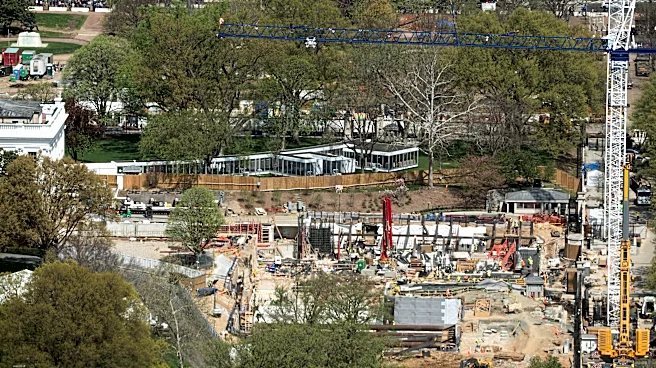
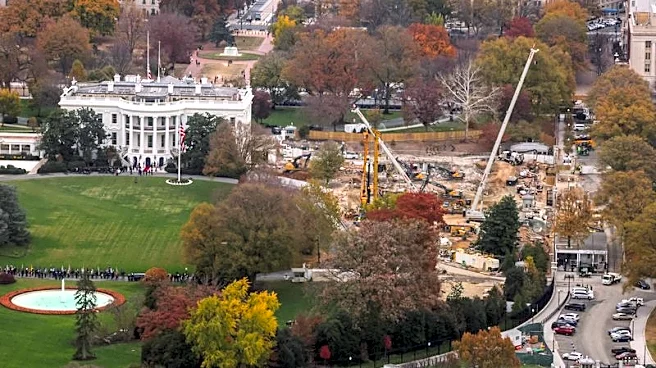
A federal appeals court in Washington, D.C., has temporarily allowed President Trump to resume construction of a planned White House ballroom. This decision comes after a lower court had previously halted the project, citing potential violations of federal laws
and lack of congressional approval. The National Trust for Historic Preservation had filed a lawsuit arguing that the construction violated the Administrative Procedure Act and the National Environmental Policy Act. The appeals court's ruling provides temporary relief to the Trump administration, allowing construction to proceed while the case returns to the district court for further clarification. The administration argues that the project, estimated to cost nearly $400 million, is crucial for the safety and security of the president and White House staff.
Why It's Important?
The decision to allow the continuation of the White House ballroom construction has significant implications for executive authority and federal oversight. The case highlights the ongoing debate over the extent of presidential power in making unilateral decisions regarding federal property. If the project proceeds without congressional approval, it could set a precedent for future executive actions bypassing legislative oversight. Additionally, the financial implications are notable, as the project is privately funded, raising questions about transparency and accountability in government projects. The outcome of this legal battle could influence future infrastructure projects and the balance of power between the executive branch and Congress.
What's Next?
The case will return to the district court for further explanation, particularly regarding the national security implications cited by the Trump administration. The administration may seek emergency intervention from the Supreme Court if necessary. The district court will need to clarify whether halting the project would indeed harm national security, as claimed. The legal proceedings will continue to be closely watched, as they could impact future executive decisions and federal construction projects. Stakeholders, including preservation groups and government officials, will likely continue to engage in the legal process to ensure compliance with federal laws.