




What's Happening?
More than 100 pet rats were discovered living in two parked cars in Eugene, Oregon, last month, according to the Eugene Police Department. On September 23, officers and animal welfare officials responded to a call regarding two cars being towed. Upon
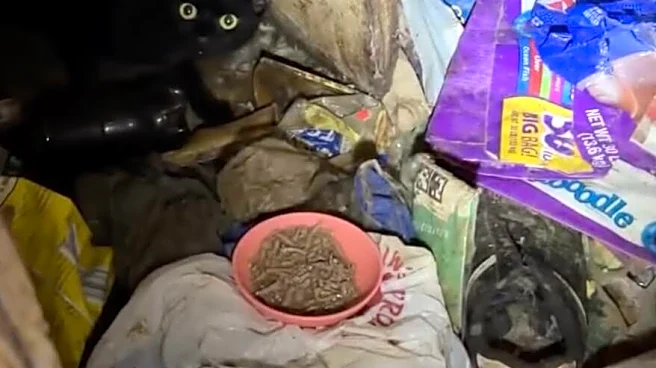
inspection, one vehicle, a blue Saturn, was found covered by a tarp and contained numerous rats. The car's interior was reportedly filled with rat feces, chewed-up seat cushions, and trash, with minimal food and water. Additional rats were subsequently found in a nearby gold Suburban. The owner of the rats claimed to have rescued them and attempted to assist in their capture using yogurt, though many proved difficult to catch. Fifty-two rats were initially taken to Greenhill Humane Society in eight cages, where three of them later gave birth to 18 newborn rats. The cars were moved to a towing yard with remaining rats inside, and animal welfare services are continuing to provide food and water while Greenhill Humane Society awaits space to accommodate more animals. The case remains an open neglect investigation.
Why It's Important?
This incident highlights significant animal welfare concerns and the challenges faced by animal control and humane societies in managing large-scale animal neglect cases. The discovery of over 100 rats in unsanitary and inadequate conditions underscores the potential for rapid animal population growth and the severe impact on animal health and well-being when proper care is not provided. Such situations place a considerable strain on local animal shelters, which must allocate resources for rescue, housing, medical care, and potential adoption of a large number of animals. Furthermore, the ongoing neglect investigation emphasizes the legal and ethical responsibilities of pet ownership and the consequences of failing to meet basic animal care standards. This event also brings attention to the broader issue of animal hoarding and the need for community awareness and intervention in such cases.
What's Next?
The neglect investigation by the Eugene Police Department is ongoing, and further actions may be taken against the owner depending on the findings. Animal welfare services will continue to care for the remaining rats in the towing yard until Greenhill Humane Society has the capacity to take them in. The humane society will likely focus on the health and rehabilitation of the rescued rats, including veterinary checks, spaying/neutering, and preparing them for potential adoption. This incident may also prompt local animal welfare organizations to increase public awareness campaigns regarding responsible pet ownership, the challenges of caring for large numbers of animals, and the resources available for individuals who may be struggling to provide adequate care for their pets. The outcome of the investigation could set a precedent for how similar cases of animal neglect are handled in the future.
Beyond the Headlines
This event delves into the complex intersection of animal welfare, public health, and social responsibility. The sheer number of rats found suggests a potential animal hoarding situation, which often has underlying psychological components for the individual involved. Beyond the immediate suffering of the animals, such conditions can pose public health risks due to unsanitary environments and potential disease transmission. The incident also raises questions about community oversight and early intervention mechanisms for identifying and addressing animal neglect before it escalates to this scale. It underscores the need for a compassionate yet firm approach from authorities, balancing the welfare of the animals with support or intervention for the owner. The long-term implications include the financial burden on animal shelters and the ethical considerations of managing and rehoming a large population of rescued animals, particularly those with specific care requirements like rats.