



What's Happening?
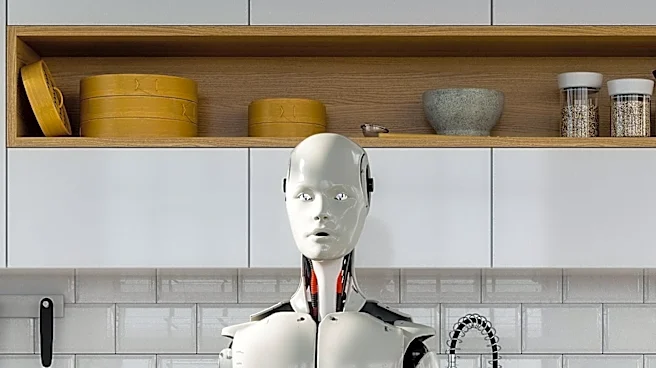
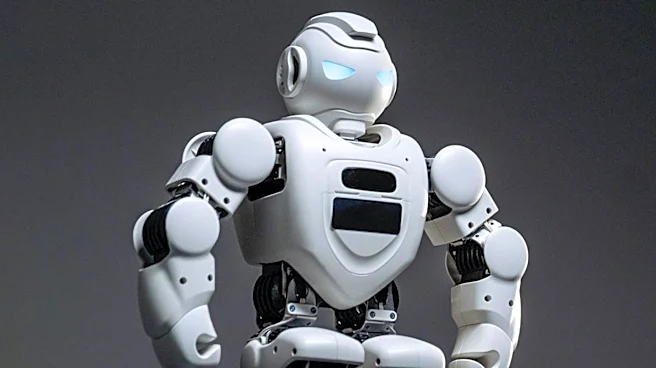
Stanford's Movement Lab has introduced HomeBody, a humanoid robot designed to operate in previously unseen kitchen environments. The robot achieves this by exploring the space, constructing a map, memorizing object locations, and executing commands such
as tidying the kitchen or retrieving items from hidden drawers. A key design principle of HomeBody is its general-purpose AI model, which dictates actions and utilizes a library of skills for execution, including navigation, picking, placing, and opening drawers. This architecture allows for the reasoning model to be easily swapped out for newer, more advanced versions, while the skill library and the room's map retain their long-term value. The team behind HomeBody includes Gio Huh, Cayden Gu, Takara E. Truong, C. Karen Liu, and Guy Tevet from Stanford and Caltech. The system also incorporates a mechanism where skills can retry actions a limited number of times; if unsuccessful, they report back to the main model with a reason, allowing for plan adjustments.
Why It's Important?
This development is significant for the robotics and artificial intelligence sectors, particularly in the U.S., as it addresses the challenge of deploying robots in dynamic, unstructured environments like homes. The 'hot-swappable' nature of HomeBody's AI model suggests a future where robotic capabilities can be continuously upgraded without rendering existing hardware or learned skills obsolete. This approach could lead to more cost-effective and adaptable robotic solutions for various industries, from domestic assistance to logistics and manufacturing. By emphasizing the long-term value of skill libraries and environmental maps over rapidly depreciating AI models, Stanford's research offers a new perspective on capital allocation in AI development. This could influence how businesses invest in AI, shifting focus from transient model licenses to durable assets like documented processes and robust skill sets, ultimately fostering more sustainable and scalable AI deployments.
What's Next?
The modular design of HomeBody suggests that future iterations could see rapid advancements as new AI reasoning models become available and are integrated. The focus on developing a robust and reusable skill library indicates that the robot's capabilities will likely expand to include a wider array of tasks and environments beyond the kitchen. Further research will likely concentrate on refining the robot's ability to learn and adapt to even more complex and unpredictable situations, potentially leading to its deployment in diverse settings such as healthcare facilities, elder care, or even hazardous environments. The team's emphasis on 'bounded authority' and 'escalation with a reason' for skill failures also points towards the development of more resilient and autonomous robotic systems that can handle unexpected challenges with minimal human intervention.
Beyond the Headlines
The HomeBody project touches upon deeper implications regarding the future of human-robot interaction and the nature of intelligence itself. By creating a robot that can independently explore and learn about its environment, the research pushes the boundaries of embodied AI. This raises questions about the evolving role of robots in daily life and the ethical considerations of autonomous systems operating within personal spaces. The distinction between 'renting' the AI model and 'owning' the skill library also highlights a potential shift in the economic landscape of AI, where the value of specialized, context-specific knowledge and capabilities might outweigh the transient power of general-purpose algorithms. This could lead to new business models and intellectual property considerations in the burgeoning field of domestic robotics.