
What's Happening?
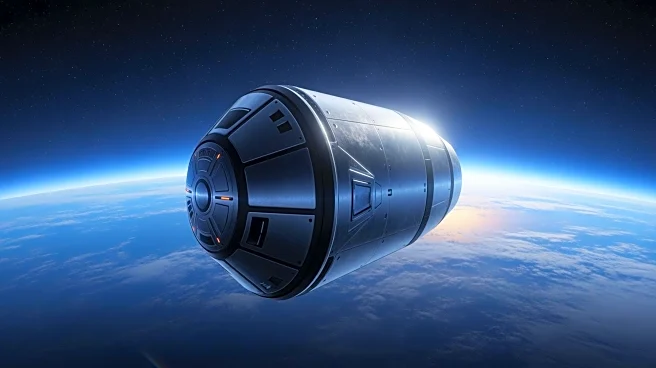
A SpaceX Dragon cargo capsule has successfully undocked from the International Space Station (ISS) after a six-month mission that included a novel capability to boost the station's orbit. The capsule, which departed at 12:05 p.m. EST on February 26, 2026,
is set to splash down in the Pacific Ocean off the California coast on February 27. During its mission, the Dragon delivered approximately 5,000 pounds of supplies and scientific equipment to the ISS and conducted six reboosts to maintain the station's altitude. This mission, known as CRS-33, marks the 33rd cargo run by SpaceX for NASA's Commercial Resupply Services program. The reboosts, traditionally performed by Russia's Progress freighter, are crucial for the station's long-term sustainability, especially as the future of Russia's involvement in the ISS program remains uncertain.
Why It's Important?
The successful demonstration of the Dragon capsule's reboost capability is significant for the future operations of the ISS. As geopolitical tensions and uncertainties about Russia's continued participation in the ISS program persist, having alternative methods to maintain the station's orbit is crucial. The Dragon's ability to perform reboosts and return cargo to Earth enhances its utility and reliability as a key component of the ISS's logistical support. This development also underscores SpaceX's growing role in space exploration and its partnership with NASA, potentially influencing future collaborations and missions. The mission's success could lead to more robust and sustainable operations for the ISS, ensuring its viability until its planned deorbiting in 2030.
What's Next?
Following the Dragon's return, the capsule will bring back various scientific experiments, including those from the Euro Material Aging study and Thailand's Liquid Crystals experiment. These studies, which examined material degradation and film stability in microgravity, could lead to advancements in spacecraft construction and electronic displays. As the ISS continues to rely on international partnerships and commercial entities like SpaceX, the success of missions like CRS-33 will be pivotal in shaping the future of space station operations. The ability to independently manage reboosts may also influence NASA's strategic planning and partnerships as it prepares for the eventual transition to commercial space stations.