

What's Happening?
A recent study has highlighted potential safety risks associated with the increasing number of senior travelers on U.S. flights. As life expectancy in the United States has risen to nearly 80 years, more individuals aged 50 and above are prioritizing
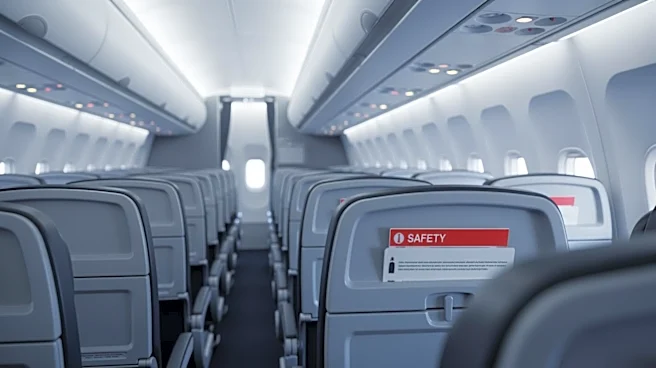
travel. This demographic shift has raised concerns about the ability of airlines to meet the Federal Aviation Administration's (FAA) 90-second emergency evacuation mandate. The study, published in AIP Advances, simulated 27 evacuation scenarios on an Airbus A320, revealing that the distribution and number of elderly passengers significantly impact evacuation times. The fastest evacuation scenario still exceeded the FAA's requirement, taking 141 seconds. Researchers suggest that uneven distribution of elderly passengers can lead to congestion and delay evacuation due to mobility and cognitive limitations.
Why It's Important?
The findings of this study are significant for the aviation industry, as they highlight the need for airlines to adapt to the changing demographics of their passengers. With a growing number of older travelers, airlines may need to reconsider seating arrangements and safety protocols to ensure compliance with safety regulations. The study suggests that strategic seating and additional safety briefings for elderly passengers could mitigate risks. This issue is crucial for maintaining passenger safety and operational efficiency, as failure to evacuate within the mandated time could have severe consequences in emergencies. The study's insights could lead to policy changes and innovations in airline safety practices.
What's Next?
Airlines may need to evaluate and potentially revise their seating policies and safety procedures to accommodate the increasing number of senior travelers. Implementing additional safety briefings and strategic seating arrangements could be considered to enhance evacuation efficiency. The aviation industry might also engage with regulatory bodies like the FAA to discuss potential updates to safety standards and evacuation protocols. As the population continues to age, these considerations will become increasingly important to ensure the safety and comfort of all passengers.