




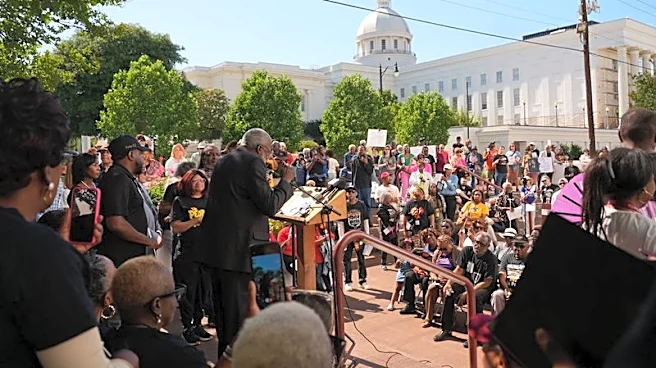

What's Happening?
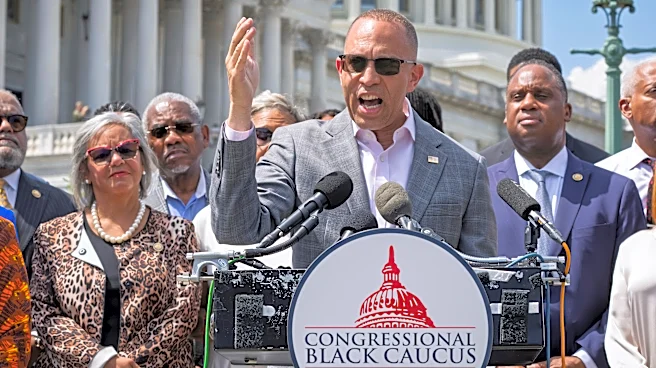
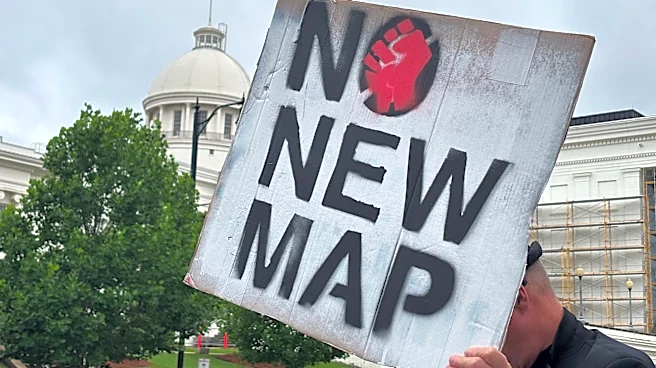
A federal court has blocked Alabama from using a congressional map that would have eliminated a second Black-opportunity district, citing intentional racial discrimination. The court's decision mandates the use of a race-blind map that includes two Black-opportunity districts
for the 2026 elections. This ruling follows a series of legal challenges to Alabama's redistricting efforts, which have been accused of diluting minority votes. The court's decision is a significant victory for Democrats and minority voters, as it ensures fair representation in the upcoming elections.
Why It's Important?
This ruling is a pivotal moment in the ongoing battle over voting rights and racial representation in the United States. By blocking Alabama's proposed map, the court is reinforcing the importance of fair representation for minority communities in the electoral process. The decision could have far-reaching implications for other states with similar redistricting disputes, potentially influencing how congressional districts are drawn nationwide. It also underscores the judiciary's role in upholding the principles of the Voting Rights Act and ensuring that electoral maps do not dilute the voting power of minority groups.
What's Next?
Alabama is expected to appeal the court's decision, which could lead to further legal proceedings and potentially another review by the U.S. Supreme Court. The state's appeal will likely focus on the interpretation of the Voting Rights Act and the constitutionality of the court-ordered map. If the case reaches the Supreme Court, it could result in a significant ruling that clarifies the legal standards for redistricting and racial gerrymandering. The outcome will be closely monitored by other states facing similar challenges, as it could set a precedent for future redistricting efforts and the protection of minority voting rights.