





What's Happening?
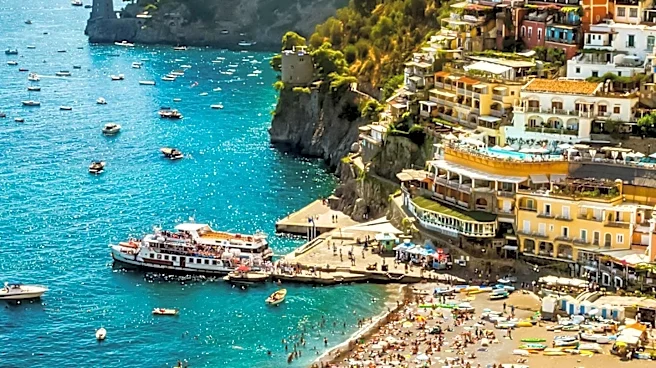
Italy's Amalfi Coast, a renowned travel destination, is experiencing significant challenges due to overtourism, particularly during peak season. Large cruise ships frequently dock in Salerno, bringing thousands of tourists who then travel to the picturesque
towns along the coast. This influx leads to severely crowded streets, traffic congestion, and growing frustration among local residents. Amalfi, being one of the most popular spots, is especially affected by these crowds. Andrea Ferraioli, president of the regional tourism board, highlighted that visitors who only spend a few hours on the coast miss out on the full experience. He suggested that quieter towns like Praiano, located between Amalfi and Positano, offer an alternative for those seeking a less crowded atmosphere, as they see fewer day-trippers.
Why It's Important?
The issue of overtourism on the Amalfi Coast has broader implications for sustainable tourism models and local economies. While tourism is a vital industry, unchecked visitor numbers can degrade the quality of life for residents, strain infrastructure, and diminish the authentic charm that attracts tourists in the first place. The frustration expressed by locals indicates a potential for social friction and a decline in community support for tourism if solutions are not found. For the tourism industry, this situation underscores the need for strategies that balance economic benefits with environmental and social sustainability. If the problem persists, it could lead to a decrease in visitor satisfaction, damage the region's reputation, and potentially necessitate restrictive measures that could impact tourism revenue in the long run.
What's Next?
Addressing overtourism on the Amalfi Coast will likely involve a multi-faceted approach. Potential next steps could include implementing crowd management strategies, such as regulating the number of cruise ship arrivals or staggering visitor times. Promoting lesser-known towns and encouraging longer stays, as suggested by Andrea Ferraioli, could help distribute tourists more evenly across the region. Local authorities might also explore investments in public transportation infrastructure to alleviate traffic congestion and improve visitor flow. Additionally, campaigns aimed at educating tourists about responsible travel and encouraging respect for local communities could be initiated. The success of these measures will depend on collaboration between local governments, tourism operators, and residents to ensure the long-term viability and appeal of the Amalfi Coast.
Beyond the Headlines
The challenges faced by the Amalfi Coast are indicative of a global phenomenon where popular destinations struggle to manage the impact of mass tourism. This situation raises ethical questions about the responsibility of tourists and the tourism industry to preserve cultural heritage and local communities. It also highlights the tension between economic growth driven by tourism and the environmental and social costs associated with it. The long-term implications could include a shift in how destinations are marketed, moving away from sheer volume towards promoting more sustainable, high-quality, and immersive experiences. This could also spur innovation in tourism management, potentially leading to technological solutions for crowd control or new models for visitor engagement that benefit both tourists and locals.