







What's Happening?
The European Union's maritime security mission, Operation Aspides, launched in February 2024 to protect commercial shipping from Houthi rebel attacks in the Red Sea, is facing a critical shortage of warships. EU foreign policy chief Kaja Kallas has urged
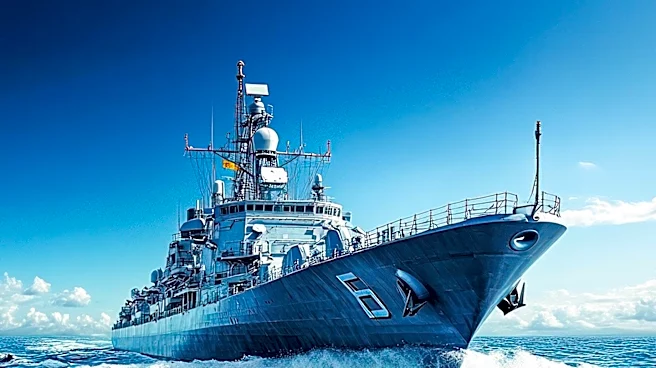
member states to provide additional naval assets, particularly advanced frigates with air defense capabilities, as the mission struggles to meet the growing demand for escorts. The mission, extended until February 2027, currently operates with six warships, significantly below the initially envisaged minimum of ten. The increased Houthi attacks have led to commercial ships queuing for military escorts, highlighting the strain on available resources. Two countries have indicated they are considering sending additional vessels, but no final commitments have been made. The challenge extends beyond the number of ships, as Aspides requires specific capabilities like air-defense and mine-countermeasure frigates.
Why It's Important?
The shortage of warships for Operation Aspides has significant implications for global trade and the U.S. economy. The Red Sea and the Bab al-Mandab Strait are critical maritime corridors for trade between Asia and Europe. Disruptions in this region, caused by Houthi attacks, force shipping companies to reroute vessels around the Cape of Good Hope, leading to longer voyages and increased transport and insurance costs. These higher costs can translate into increased prices for goods, impacting supply chains and potentially contributing to inflation in the U.S. and globally. The situation also underscores the vulnerability of international shipping to regional conflicts and the need for robust maritime security. The inability of the EU to adequately protect commercial vessels could lead to further economic instability and pressure on global fuel markets, which are already under strain.
What's Next?
The EU will continue to press member states to commit more naval assets to Operation Aspides. Discussions are ongoing, with Belgium reportedly considering deploying an additional frigate and the Netherlands expected to respond positively to reinforcement requests. Italy, a key participant, is also advocating for more ships and aircraft. The effectiveness of these efforts will determine whether the mission can adequately address the escalating Houthi threats and reduce the backlog of commercial vessels awaiting escort. There are also proposals to expand Aspides' role to include mine-clearing operations in the Strait of Hormuz, which would further increase the demand for naval resources. The coming months will reveal if EU member states can overcome their reluctance to deepen military involvement and provide the necessary capabilities to secure these vital shipping lanes.
Beyond the Headlines
The challenges faced by Operation Aspides highlight a broader geopolitical tension and the evolving nature of maritime security. The Houthi attacks, often linked to Iran, demonstrate how regional conflicts can have far-reaching global economic consequences. The reluctance of some European governments to commit more naval assets reflects a cautious approach to military involvement in the wider Middle East conflict, balancing economic interests with geopolitical risks. This situation also brings into focus the strategic importance of chokepoints like the Bab al-Mandab Strait and the Strait of Hormuz, and the need for international cooperation to ensure freedom of navigation. The ongoing struggle to secure these waterways could lead to a re-evaluation of global supply chain resilience and the role of naval power in protecting international commerce.