

What's Happening?
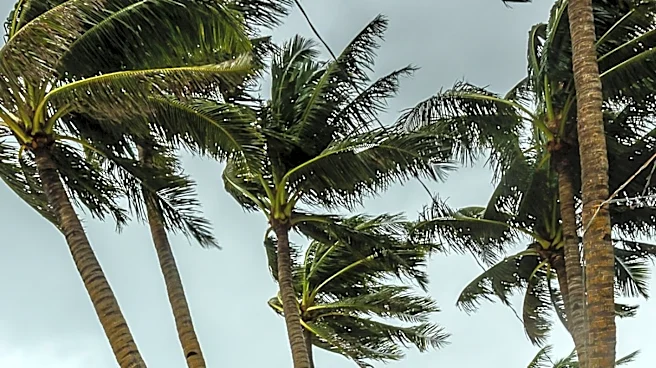
Typhoon Dolphin is approaching southwestern Japan, prompting the evacuation of nearly 260,000 people in Kagoshima and Okinawa. The typhoon, with maximum sustained winds of 144 km/h and gusts up to 198 km/h, is expected to bring heavy rain and high waves,
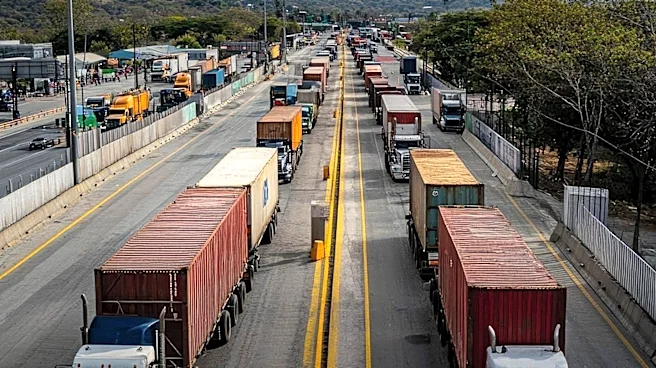
increasing the risk of flash floods and landslides. Over 500 flights have been canceled, and Toyota has suspended operations at nine factories. The storm is also affecting Kumamoto Prefecture, which is still recovering from a recent earthquake.
Why It's Important?
The typhoon's impact on Japan highlights the challenges of managing natural disasters in densely populated areas. The evacuation and flight cancellations disrupt daily life and economic activities, emphasizing the need for effective disaster preparedness and response strategies. The calm response of residents and the continued operation of essential services demonstrate resilience and community support in times of crisis. The storm's trajectory towards China also raises concerns about its potential impact on other regions.
What's Next?
As Typhoon Dolphin moves towards China, authorities in both Japan and China will continue to monitor its path and implement necessary safety measures. The storm's potential to cause further disruptions and damage will require ongoing coordination between government agencies and communities. Efforts to support affected residents and restore normalcy will be crucial in the aftermath of the typhoon.