



What's Happening?
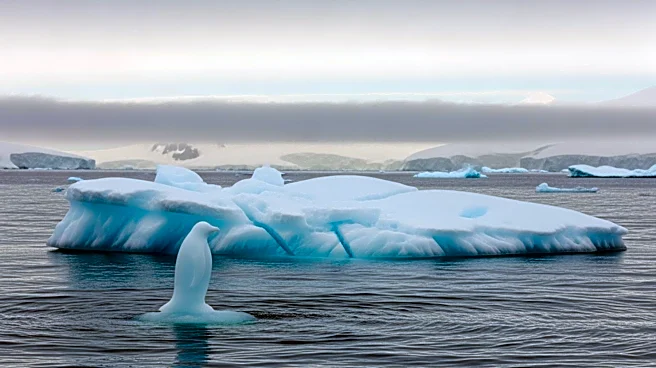
The International Union for Conservation of Nature (IUCN) has declared the emperor penguin an endangered species as Antarctic sea ice continues to shrink due to rising temperatures. The penguin population is projected to decrease by half by the 2080s,
with a 10% decline already observed between 2009 and 2018. Emperor penguins rely on stable sea ice for breeding, but since 2016, the ice has been retreating to record-low levels, increasing the risk of chicks being lost to the ocean. The IUCN's Red List update also includes the Antarctic fur seal, which has seen a population decline of over 50% due to reduced food availability as warming oceans push krill deeper.
Why It's Important?
The endangered status of emperor penguins highlights the severe impact of climate change on ice-dependent species. As sea ice continues to diminish, the survival of these penguins is threatened, reflecting broader ecological disruptions in Antarctica. The loss of sea ice affects not only penguin breeding but also the entire Antarctic ecosystem, which relies on ice for stability. This development underscores the urgent need for global climate action to preserve critical habitats and prevent further biodiversity loss.
What's Next?
Conservation efforts must be intensified to protect emperor penguins and other species affected by climate change. This includes monitoring sea ice levels and implementing strategies to mitigate the impact of warming temperatures. International cooperation is essential to address the root causes of climate change and safeguard vulnerable ecosystems. The IUCN's findings may prompt increased advocacy for stronger environmental policies and conservation initiatives.
Beyond the Headlines
The endangered status of emperor penguins serves as a stark reminder of the interconnectedness of global ecosystems and the far-reaching consequences of climate change. As ice-dependent species struggle to adapt, the cascading effects on biodiversity and ecological balance become more pronounced. This situation calls for a reevaluation of human activities contributing to climate change and a commitment to sustainable practices.