









What's Happening?
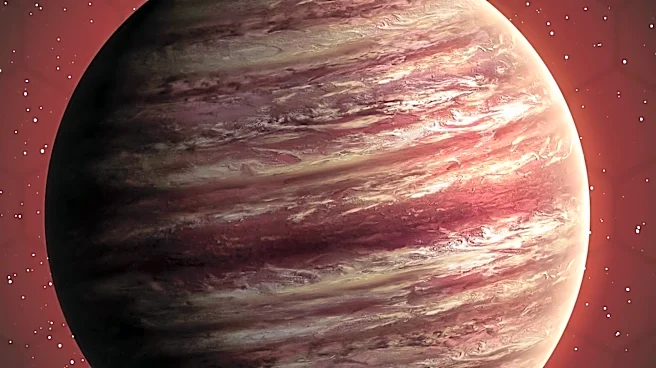
Proxima Centauri b, an exoplanet orbiting the nearest star to the Sun, Proxima Centauri, is located just over four light-years away. It is situated in the habitable zone where liquid water could potentially exist on its surface. However, the planet's
habitability is uncertain due to its exposure to intense radiation from its red-dwarf star. Discovered in 2016, Proxima b has a mass similar to Earth's and completes an orbit every 11.2 days. Despite its proximity, the planet's atmosphere remains unobserved, leaving its potential to support life unknown. The planet's environment is harsh, with high levels of X-ray and ultraviolet radiation, which could strip away any atmosphere it might have.
Why It's Important?
The study of Proxima Centauri b is crucial for understanding the potential for life on planets orbiting red dwarfs, the most common type of star in the Milky Way. If Proxima b can retain an atmosphere despite its harsh environment, it suggests that habitable conditions might be more common than previously thought. Conversely, if the planet is barren, it could indicate that many planets in similar orbits are inhospitable. This research impacts future exoplanet exploration and the search for extraterrestrial life, as it challenges scientists to develop methods to detect and analyze atmospheres of distant worlds.
What's Next?
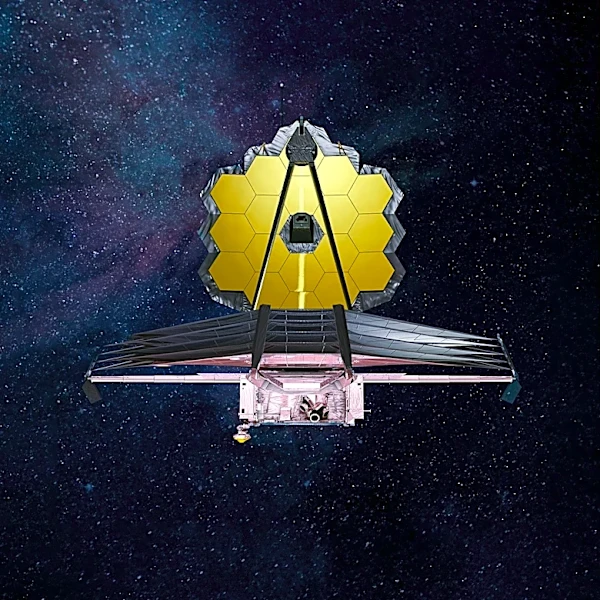
Future telescopes may be able to separate Proxima b's light from its star, allowing scientists to search for atmospheric signs. This could provide insights into the planet's composition and potential habitability. The ongoing study of Proxima b will inform the design of missions aimed at exploring exoplanets around red dwarfs, helping to refine models of planetary formation and atmospheric retention. As technology advances, the ability to directly observe and analyze exoplanetary atmospheres will become a key focus in the quest to find life beyond Earth.