





What's Happening?
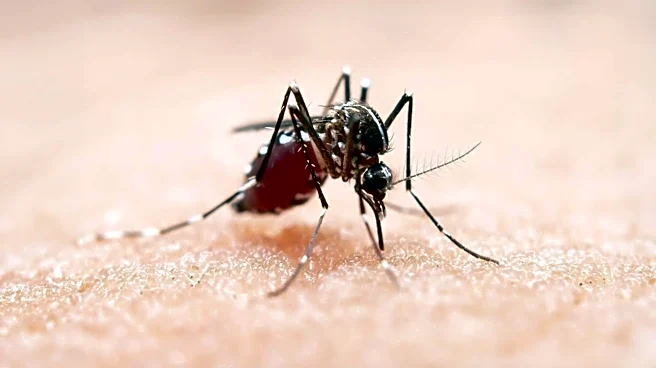
As mosquitoes develop resistance to pyrethroid, the primary insecticide used in bed nets for the past 25 years, a new generation of bed nets treated with two insecticides is gaining traction in malaria-prone regions. These innovative nets have demonstrated
significant success in pilot studies, reportedly saving an estimated 25,000 lives. This development comes as a crucial step in the ongoing global effort to combat malaria, a disease that continues to affect millions and cause substantial mortality, particularly among children. The new nets aim to overcome the challenge of insecticide resistance, which has threatened to undermine previous gains in malaria prevention.
Why It's Important?
The emergence of insecticide resistance in mosquitoes poses a severe threat to global public health, potentially reversing decades of progress in malaria control. The development and deployment of dual-insecticide bed nets are critical because they offer a renewed defense against this adaptable vector. Malaria disproportionately affects vulnerable populations, and effective prevention tools like these nets are essential for reducing disease burden, improving child survival rates, and supporting economic development in affected regions. For the U.S., while malaria is not endemic, global health initiatives are vital for preventing the re-emergence of such diseases and for maintaining international stability, which indirectly impacts national security and economic interests. The success of these nets highlights the importance of continuous innovation in public health interventions.
What's Next?
The successful pilot studies of these dual-insecticide bed nets are likely to lead to their broader distribution and implementation in malaria-endemic areas. International health organizations, governments, and non-profits will play a key role in scaling up manufacturing and ensuring equitable access. Continued monitoring of mosquito populations for resistance to the new combination of insecticides will be crucial to ensure the long-term effectiveness of this strategy. Further research into novel insecticides and alternative vector control methods will also remain a priority to stay ahead of evolving mosquito resistance. The development of these nets underscores the need for sustained investment in global health research and development.
Beyond the Headlines
The ongoing battle against mosquito-borne diseases, exemplified by the development of these new bed nets, highlights the dynamic and persistent nature of public health challenges. It underscores the concept of an 'arms race' between human interventions and the evolutionary adaptability of pathogens and vectors. This situation also brings to light the complex interplay of scientific innovation, global funding, and equitable distribution in addressing health disparities. The success of these nets could serve as a model for tackling other vector-borne diseases, emphasizing the importance of multi-pronged approaches and continuous adaptation. Furthermore, it raises questions about the sustainability of insecticide-based solutions and the potential for future ecological impacts, prompting a broader discussion on integrated pest management strategies.