


What's Happening?
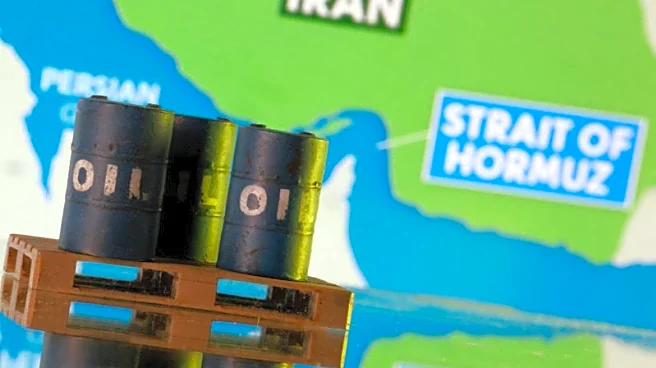
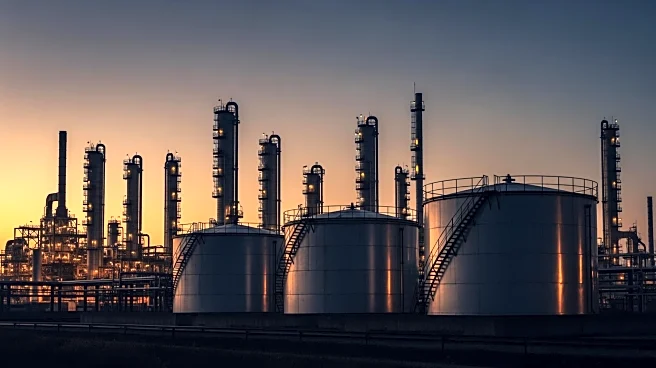
Iraq has been compelled to shut down significant oil production due to a shortage of tankers, a consequence of heightened risks in the Strait of Hormuz following the U.S.-Iran conflict. Iraqi officials have reported cuts in output at major fields, including
Rumaila, West Qurna 2, and Maysan, totaling at least 1.5 million barrels per day. The Ceyhan pipeline to Turkey has been closed, and with storage capacity running low, Iraq faces a critical situation. The lack of available tankers, despite high charter rates, has left oil with no place to go, exacerbating the production halt.
Why It's Important?
The shutdown of Iraqi oil production represents a significant disruption in global oil supply, as Iraq contributes over one percent of global output. The situation highlights the fragility of global oil logistics and the impact of geopolitical tensions on energy markets. Prolonged production halts could lead to social and political unrest within Iraq and the Kurdistan Region, as well as economic repercussions globally. The potential for similar actions in neighboring countries, such as Kuwait and Saudi Arabia, could further strain global oil supplies and drive up prices.
What's Next?
If the closure of the Strait of Hormuz continues, Iraq and other Gulf Cooperation Council (GCC) states may face extended production shutdowns. Analysts predict that total GCC shut-ins could reach 4.7 million barrels per day, significantly impacting global oil exports. The situation may prompt international efforts to resolve the conflict and secure energy supply routes. Additionally, countries may seek to diversify energy sources and increase strategic reserves to mitigate future risks.