
What's Happening?
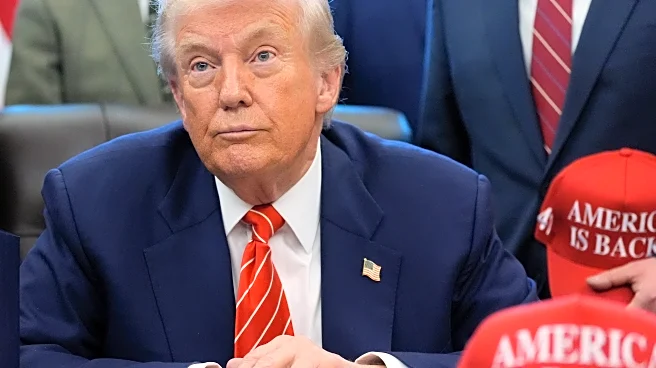
The World Economic Forum's annual meeting in Davos has been significantly impacted by U.S. President Donald Trump's recent threat to seize Greenland. This unexpected geopolitical move has caused European
leaders to urgently convene and discuss a unified response. The forum, which is attended by nearly 65 heads of state and government, including six of the G7 leaders, is set against a backdrop of existing geopolitical tensions. European Commission President Ursula von der Leyen and French President Emmanuel Macron are expected to address the issue in their speeches, potentially outlining the extent of their opposition to President Trump's proposal. The forum will also cover other pressing global issues such as economic disparity, climate change, and technology.
Why It's Important?
President Trump's threat to seize Greenland has introduced a new layer of complexity to international relations, particularly between the U.S. and Europe. This development could strain transatlantic ties and impact global cooperation on various fronts, including trade and security. The response from European leaders at the World Economic Forum will be crucial in determining the future of U.S.-Europe relations. Additionally, the situation highlights the broader geopolitical challenges that world leaders must navigate amidst ongoing economic and environmental issues. The forum's discussions could influence international policy decisions and economic strategies moving forward.
What's Next?
As the World Economic Forum continues, all eyes will be on President Trump's upcoming appearance and the potential diplomatic fallout from his Greenland comments. European leaders are likely to use the forum as a platform to solidify their stance and possibly propose countermeasures. The outcome of these discussions could lead to shifts in international alliances and trade agreements. Furthermore, the forum's focus on global cooperation may prompt new initiatives aimed at addressing the underlying causes of geopolitical tensions, such as economic inequality and climate change.