





What's Happening?
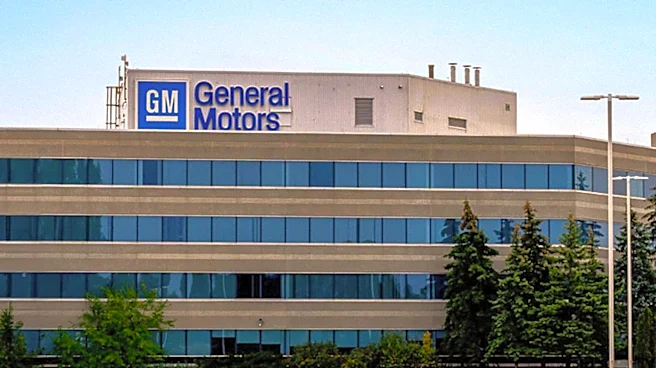
General Motors' Eastern Aircraft Division, based in Linden, New Jersey, played a significant role in World War II aircraft production by building Grumman-designed aircraft, including the FM-2 Wildcat. This initiative began in April 1942, as Grumman lacked
the capacity to meet the demand for new orders while maintaining existing aircraft. One such aircraft, the FM-2 Wildcat, BuNo 86754, was delivered to the U.S. Navy in July 1945. This particular aircraft, now part of the Erickson Aircraft Collection in Madras, Oregon, has a notable history, serving as an agricultural sprayer before its acquisition by the collection in 1991. The FM-2 variant featured a lighter, more powerful Wright R-1820-65 Cyclone 9 engine and typically carried four Browning .50 caliber machine guns, along with bombs or rockets. General Motors also implemented a Suggestion Plan in 1942, rewarding employees for ideas that improved manufacturing efficiency or safety.
Why It's Important?
The involvement of General Motors in wartime aircraft production underscores the critical role of American industry in supporting the U.S. military effort during World War II. The Eastern Aircraft Division's contribution of FM-2 Wildcats was vital for naval operations, demonstrating the adaptability and manufacturing prowess of major corporations during national crises. This historical context highlights how U.S. companies pivoted their production capabilities to meet urgent defense needs, impacting the course of the war. The FM-2 Wildcat's design, including Grumman's innovative 'STO-Wing' for carrier storage, represents significant advancements in aviation engineering that influenced subsequent aircraft development. The preservation of aircraft like BuNo 86754 in collections serves as a tangible link to this era, educating the public about the technological and industrial achievements of the time and honoring the legacy of those who contributed to the war effort.
What's Next?
The continued preservation and exhibition of historical aircraft like the FM-2 Wildcat BuNo 86754 by institutions such as the Erickson Aircraft Collection ensure that future generations can learn about this significant period in U.S. history. These collections often participate in airshows and educational programs, providing public access to these artifacts. Ongoing research and documentation by aviation historians, such as Randy Malmstrom, will continue to shed light on the detailed histories of these aircraft and the companies that produced them. This sustained interest helps maintain the legacy of American industrial innovation and military aviation, potentially inspiring new generations in fields like engineering and history. The focus will remain on maintaining the airworthiness of these vintage aircraft and sharing their stories with a broader audience.
Beyond the Headlines
The story of General Motors' Eastern Aircraft Division and the FM-2 Wildcat extends beyond mere wartime production; it reflects a broader cultural and industrial mobilization in the U.S. during World War II. The GM Suggestion Plan, which rewarded employees for efficiency and safety improvements, illustrates an early form of corporate engagement in fostering innovation and employee morale during a period of intense national effort. This approach not only boosted production but also cultivated a sense of shared purpose among workers. The transition of a warplane to an agricultural aircraft and then to a museum piece highlights the diverse post-service lives of military hardware and the evolving appreciation for historical artifacts. It also subtly points to the ingenuity required to repurpose technology, showcasing a cycle of utility from defense to civilian applications and ultimately to historical preservation.