







What's Happening?
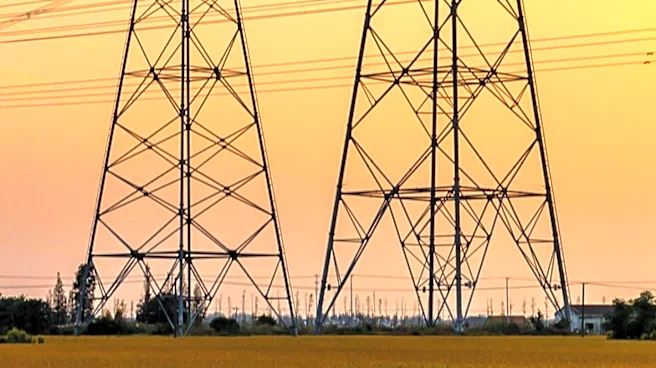
The German government's international development agency is actively seeking to establish a 'coalition of the willing' among emerging and developing countries to address sulfur hexafluoride (SF6) emissions, particularly within China's electric grid. SF6 is a potent
greenhouse gas, 24,300 times more effective at warming the planet than carbon dioxide, and once released, it remains in the atmosphere for 1,000 years. China's electric grid is the largest emitter of SF6 globally, with emissions nearly doubling from 2011 to 2021 and projected to continue rising. While China's Ministry of Ecology and Environment (MEE) claims utilities can recycle 90% of waste SF6, Inside Climate News estimates the actual recycling rate is closer to 30%. Increasing this rate to approximately 90% could significantly reduce greenhouse gas emissions at a relatively low cost, estimated at about $6 million per year, compared to the $70 billion annually invested in China's electric grid. The Chinese government has recently called for an SF6 management plan, signaling a positive policy shift.
Why It's Important?
The initiative to reduce SF6 emissions in China's electric grid is critically important due to the gas's extreme global warming potential and long atmospheric lifetime. China accounts for over half of worldwide SF6 emissions, making its reduction efforts crucial for global climate goals. The proposed 'coalition of the willing' highlights an international recognition of the transboundary nature of climate change and the need for collaborative solutions. For the U.S., successful reduction of SF6 in China could set a precedent for international cooperation on other potent greenhouse gases and potentially influence U.S. climate policy and diplomatic strategies. The economic implications are also significant; the relatively low cost of increasing SF6 recycling in China, estimated at $6 million annually, demonstrates a highly cost-effective method for substantial greenhouse gas reduction compared to other climate mitigation strategies like installing wind or solar power. This could encourage U.S. businesses and policymakers to explore similar cost-effective, high-impact environmental solutions domestically and internationally.
What's Next?
The German initiative will continue its efforts to build the 'coalition of the willing' and engage with government officials and industry executives in countries like China to discuss potential reduction strategies for SF6. China's MEE has recently introduced incentives, allowing utilities to sell carbon credits for recycling over 90% of their waste SF6, which is expected to encourage higher recycling rates. However, experts suggest that stronger regulations may be necessary in addition to incentives. The development of alternative electric insulating gases for high-voltage equipment in China is projected to take 10 to 20 years to fully mature. In the interim, there will be a focus on blocking SF6 use in non-essential applications. The Chinese government has also set a target to reduce emissions of SF6 and other non-CO2 greenhouse gases by 30 million metric tons of carbon dioxide equivalent by 2030, indicating a commitment to addressing this issue within its broader climate response plan.
Beyond the Headlines
Beyond the immediate environmental impact, this initiative underscores a broader shift in international climate diplomacy, moving towards targeted, sector-specific interventions for highly potent greenhouse gases. The concept of a 'coalition of the willing' for environmental action suggests a flexible, multi-stakeholder approach that could bypass traditional, often slower, multilateral negotiations. This could lead to more agile and effective responses to specific climate challenges. The ethical dimension of developed nations assisting developing ones in mitigating environmental damage, particularly when the technology for reduction is well-established, is also prominent. The success of such a coalition could foster greater trust and shared responsibility in global climate governance, potentially influencing how future environmental challenges are addressed. It also highlights the often-overlooked role of industrial gases in climate change, shifting focus from solely carbon dioxide to a wider array of pollutants with significant warming potential.