



What's Happening?
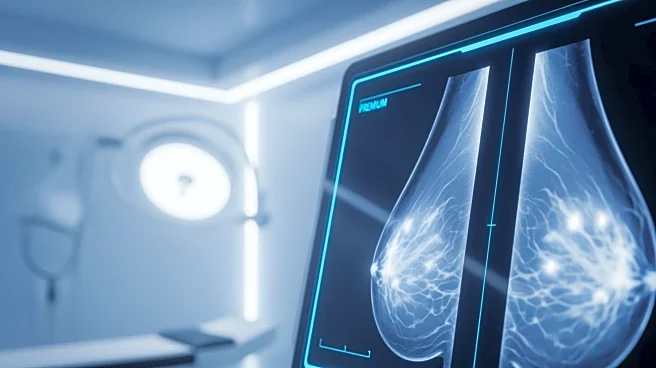
A study published in npj Digital Medicine reveals that an AI model can detect subtle signals in mammograms that indicate a high risk of developing aggressive interval cancers years before they appear. The study evaluated four deep learning algorithms,
with MIT's Mirai model showing the best performance. The model identified 27.5% of interval cancers by flagging the top 4% of 'normal' mammograms as high risk. Interval cancers, which develop between scheduled screenings, are often more aggressive and lead to worse outcomes. The study suggests that AI tools could support risk-stratified breast cancer screening strategies, though clinical evaluation is needed before implementation.
Why It's Important?
The ability to predict interval cancers could revolutionize breast cancer screening by allowing for earlier intervention and potentially improving patient outcomes. Interval cancers are typically more aggressive and harder to treat, so identifying them early could save lives. The use of AI in screening could lead to more personalized and effective healthcare, reducing the burden on healthcare systems and improving survival rates. This development also highlights the potential of AI to enhance diagnostic accuracy and efficiency in medical imaging, paving the way for broader applications in healthcare.
What's Next?
Further research is needed to validate these findings in clinical trials and real-world settings. If successful, AI models like Mirai could be integrated into routine screening protocols, allowing for more targeted and frequent screenings for high-risk individuals. This could lead to a shift in how breast cancer screening is conducted, with a focus on personalized risk assessment. Healthcare providers and policymakers will need to consider the implications of AI integration, including ethical considerations and the need for regulatory frameworks to ensure patient safety and data privacy.