






What's Happening?
In Charlottesville, the bronze from a melted statue of Confederate Gen. Robert E. Lee is set to be transformed into a new piece of public art. This initiative follows the removal of the statue after a violent rally by white supremacists in 2017. The city,
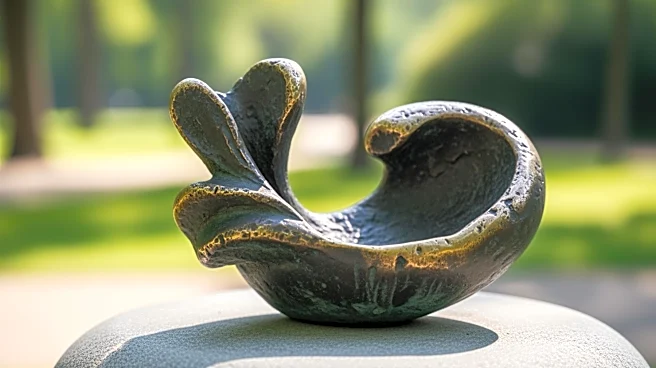
aiming to address the divisive history associated with the statue, has organized a competition to repurpose the bronze into a unifying artwork. The nonprofit Swords into Plowshares has narrowed down the submissions to three finalists, each proposing a design that incorporates the bronze into a new memorial. The project seeks to create a site of memory that acknowledges the past while promoting healing and unity.
Why It's Important?
The transformation of the Robert E. Lee statue into a new public artwork is significant as it represents a broader movement to address and reinterpret Confederate symbols in the U.S. This initiative in Charlottesville is part of a larger national conversation about race, history, and public memory, intensified by events like the Unite the Right rally and the murder of George Floyd. By repurposing the statue's bronze, the city aims to foster reconciliation and reflect a more inclusive narrative. This project could serve as a model for other communities grappling with similar issues, highlighting the potential for art to play a role in societal healing.
What's Next?
The public can view the proposals for the new artwork at the Jefferson School or online, with a winner expected to be announced on June 10, marking the five-year anniversary of the statue's removal. The selected design will use the bronze from the melted statue to create a memorial that captures the essence of the community and addresses historical wounds. The project organizers hope to complete the installation in a way that engages the community and promotes ongoing dialogue about the city's history and values.
Beyond the Headlines
This initiative not only addresses the physical presence of Confederate symbols but also engages with the deeper cultural and historical narratives they represent. By involving the community in the creation of the new artwork, Charlottesville is taking a proactive approach to reckon with its past. The project also raises questions about how societies choose to remember and interpret their histories, and the role of public art in shaping collective memory.