
What's Happening?
The U.S. Senate Appropriations Defense Subcommittee has proposed a significant increase in funding for the Space Force's Space Access, Mobility, and Logistics (SAML) research and development (R&D) efforts. The draft budget bill, released on November 16,
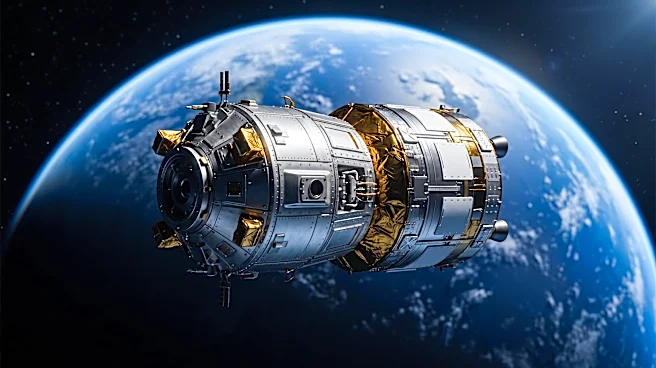
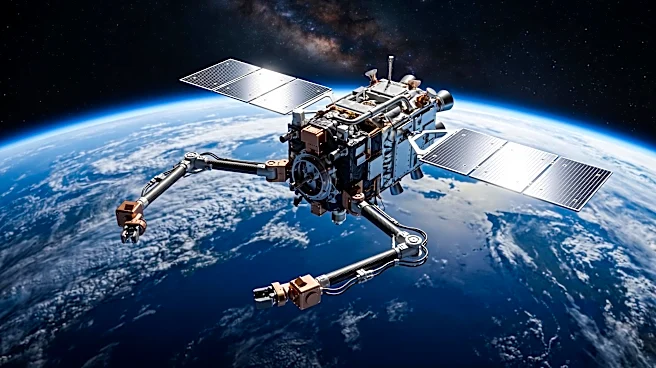
allocates $31.7 million for SAML R&D, marking a 226% increase over the Space Force's initial request of $9.6 million. This additional funding is specifically earmarked to support in-orbit servicing and robotic servicing in space. Furthermore, appropriators have designated an additional $20 million for the full-rate production of SAML satellites. This comes as the Space Force and industry partners have achieved several milestones in space mobility and servicing in 2026, including the Victus Haze mission involving Rocket Lab and True Anomaly spacecraft, and Northrop Grumman's mission robotic vehicle. The Space Force is also preparing for multiple SAML demonstrations in 2027, including two attempted refueling operations in geostationary orbit.
Why It's Important?
This substantial increase in funding from Capitol Hill signals a strong congressional endorsement for the Space Force's pursuit of advanced in-space servicing capabilities. The ability to refuel, repair, and relocate satellites in orbit could offer significant cost savings for the U.S. military, extending the operational life of valuable assets that would otherwise need to be replaced. Colonel Scott Carstetter, the Space Force's SAML director, highlighted that augmented maneuver services could benefit satellites valued at billions of dollars, providing increased capability to the warfighter at a fraction of the cost. This investment also encourages industry partners to continue developing these critical technologies, fostering innovation and competition in the commercial space sector. The operationalization of on-orbit refueling by 2032, as hoped by the Space Force, could revolutionize how military space assets are managed and sustained, enhancing national security and strategic flexibility in space.
What's Next?
The draft appropriations bill, while subject to change, provides a clear indication of legislative support for the Space Force's SAML initiatives. The Space Force is gearing up for multiple SAML demonstrations in 2027, including two attempted refueling operations in geostationary orbit involving an Astroscale U.S. Provisioner spacecraft and the Space Force’s Tetra-5 satellite. The Defense Innovation Unit is also supporting this effort by purchasing fuel to be stored on a commercial depot provided by Orbit Fab. Additionally, augmented maneuver tests are planned, with Starfish Space contracted to use its Otter space vehicle to relocate a GEO-based weather satellite, EWS-G1, to a disposal orbit. These demonstrations are crucial steps towards the Space Force's goal of operationalizing on-orbit refueling by 2032, which will likely involve further collaboration with commercial entities and continued congressional oversight and funding.
Beyond the Headlines
The Senate's push for increased SAML funding extends beyond immediate operational benefits, hinting at a broader strategic shift in U.S. space policy. By investing in in-space servicing, the U.S. is moving towards a more resilient and sustainable space architecture. This capability could reduce reliance on costly and time-consuming satellite launches, allowing for more dynamic and adaptive responses to evolving threats and operational needs in space. The emphasis on robotic servicing also raises ethical and legal considerations regarding the militarization of space and the potential for dual-use technologies. Furthermore, the collaboration with commercial companies like Momentus Space, which is supporting DARPA's NOM4D program for automated in-space assembly, underscores a growing trend of public-private partnerships in advancing critical space technologies. This collaborative approach could accelerate technological development and foster a robust domestic space industry, positioning the U.S. as a leader in future space operations.