







What's Happening?
President Trump announced progress in indirect talks with Iran, aiming to transform an interim truce into a lasting peace. The discussions, held in Qatar, involved Trump's son-in-law Jared Kushner and envoy Steve Witkoff. These talks are part of a 60-day
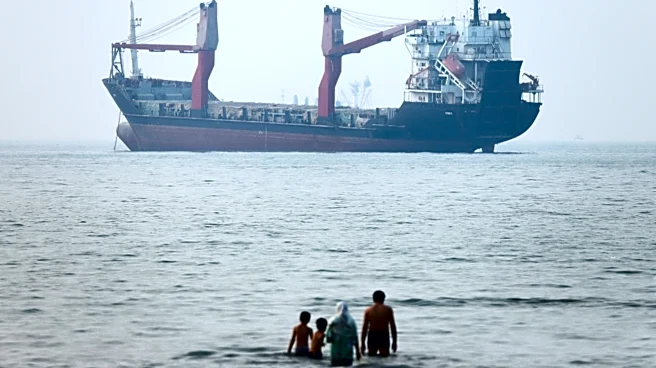
negotiation period between Washington and Tehran, focusing on issues like Iran's control over the Strait of Hormuz and its nuclear program. Despite recent retaliatory strikes between the US and Iran, Trump expressed optimism about the negotiations, emphasizing the goal of denuclearization. The talks follow a period of heightened tensions, including an Iranian drone attack on a commercial vessel, which underscored Tehran's intent to maintain control over the strategic waterway.
Why It's Important?
The outcome of these talks could significantly impact US-Iran relations and regional stability in the Middle East. A successful negotiation could lead to reduced military tensions and a more stable geopolitical environment, potentially affecting global oil markets and international diplomatic relations. The talks also reflect the Trump administration's approach to foreign policy, balancing military pressure with diplomatic engagement. The resolution of these issues could influence US domestic politics, particularly in how the administration is perceived in handling international conflicts.
What's Next?
The continuation of talks in Qatar suggests ongoing diplomatic efforts to resolve the conflict. The US and Iran will likely face pressure to reach a consensus on key issues, including Iran's nuclear ambitions and control over the Strait of Hormuz. The international community, including allies and adversaries, will closely monitor these developments, as the outcome could reshape alliances and power dynamics in the region. Potential reactions from other Middle Eastern countries and global powers could further influence the direction of these negotiations.