
What's Happening?
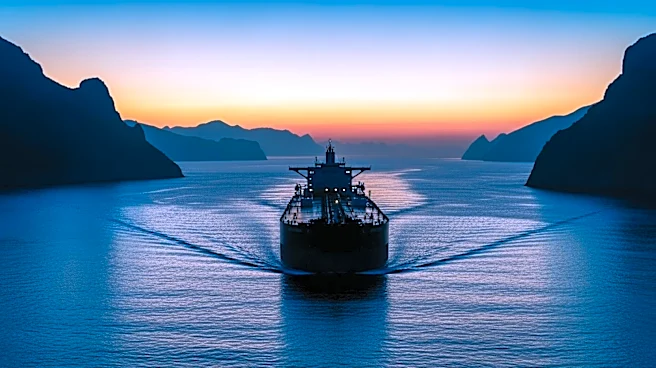
A Chinese supertanker, the VLCC Yuan Hua Hu, carrying two million barrels of Iraqi crude oil, has successfully navigated through the Strait of Hormuz after being stranded in the Gulf for over two months
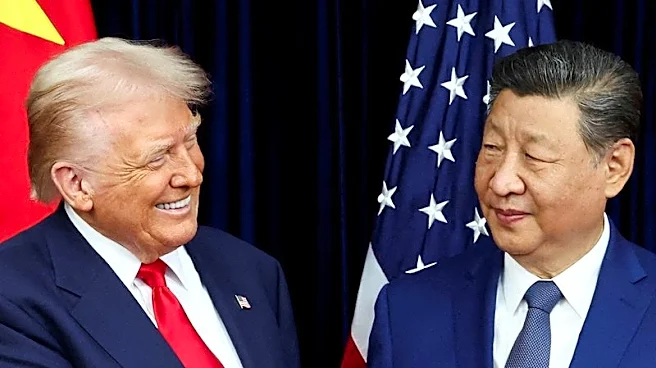
due to the ongoing U.S.-Iran conflict. The tanker is now anchored off the Gulf of Oman, close to a U.S. Navy blockade on Iranian vessels. This marks the third known passage by a Chinese oil tanker through the strait since the U.S.-Israeli war with Iran began on February 28. The crossing coincides with an upcoming meeting between U.S. President Donald Trump and Chinese President Xi Jinping, following a visit by Iranian Foreign Minister Abbas Araqchi to Beijing. Iran has been tightening its control over the strait, securing agreements with Iraq and Pakistan to ship oil and liquefied natural gas, potentially solidifying its influence over the waterway.
Why It's Important?
The successful passage of the Chinese supertanker through the Strait of Hormuz highlights the strategic importance of this waterway, which is a critical chokepoint for global oil shipments. The ongoing U.S.-Iran conflict has heightened tensions in the region, affecting international shipping and energy markets. The ability of Chinese vessels to navigate the strait despite these tensions underscores China's significant role in global energy trade and its diplomatic engagements with Iran. The situation also reflects the broader geopolitical dynamics involving the U.S., China, and Iran, with potential implications for global oil prices and energy security. Countries like Iraq and Pakistan, by securing deals with Iran, may also be positioning themselves strategically in the evolving energy landscape.
What's Next?
The upcoming meeting between President Trump and President Xi could influence future developments in the region, potentially affecting diplomatic and economic relations. The U.S. may continue to enforce its naval blockade, impacting the movement of Iranian vessels and possibly escalating tensions further. Meanwhile, other countries might seek similar agreements with Iran to ensure their energy supplies, which could alter regional alliances and economic dependencies. The international community will likely monitor these developments closely, as they could have significant repercussions for global energy markets and geopolitical stability.