


What's Happening?
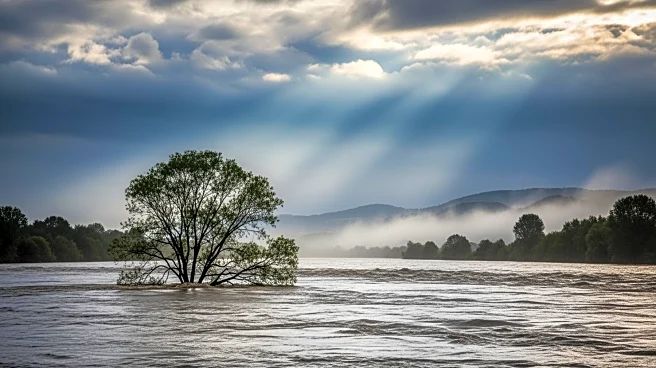
France has issued red flood alerts in three départements due to the aftermath of Storm Nils, which has caused significant flooding across the country. The Garonne River has overflowed, inundating homes and isolating villages. Hydrologists warn that the rain
is falling on soils that have reached record levels of saturation. Météo France has stated that red flood alerts will remain in place in Gironde, Lot-et-Garonne, and Maine-et-Loire, while the number of counties under orange alert will decrease from 14 to 12. Monique Barbut, the minister for the ecological transition, announced that a state of emergency would be declared to expedite insurance claims once the floods subside. Lucie Chadourne-Facon, director of Vigicrues, France’s flood monitoring service, described the rainfall as 'exceptional' and noted that even minimal additional rainfall could trigger further flooding.
Why It's Important?
The flooding in France underscores the increasing frequency and intensity of extreme weather events, which are often linked to climate change. The situation highlights the urgent need for countries to enhance their climate adaptation strategies. The EU's scientific advisers have urged Europe to prepare for a world that could be 3°C hotter by the end of the century, which is double the target set by the 2015 Paris Agreement. This event serves as a stark reminder of the potential economic and social impacts of climate change, as it disrupts communities, damages infrastructure, and necessitates costly emergency responses. The floods in France, following similar events in Portugal and Spain, illustrate the broader European vulnerability to climate-related disasters.
What's Next?
As the floodwaters continue to rise, particularly on the Maine and Loire Rivers, French authorities are likely to focus on immediate relief efforts and long-term adaptation strategies. The declaration of a state of emergency will facilitate faster insurance claims and recovery efforts. In the longer term, France may need to invest in infrastructure improvements and community resilience programs to better withstand future climate-related events. The EU's call for stress-testing more extreme climate scenarios suggests that European nations may need to collaborate on regional strategies to mitigate the impacts of climate change.
Beyond the Headlines
The current flooding in France may prompt a reevaluation of national and regional climate policies, emphasizing the need for comprehensive adaptation measures. This could include investments in flood defenses, improved water management systems, and community education programs. The event also raises ethical questions about the responsibility of developed nations to lead in climate adaptation and mitigation efforts, given their historical contributions to global emissions. Additionally, the floods highlight the importance of scientific research in understanding and predicting the impacts of climate change, which can inform policy decisions and public awareness.