




What's Happening?
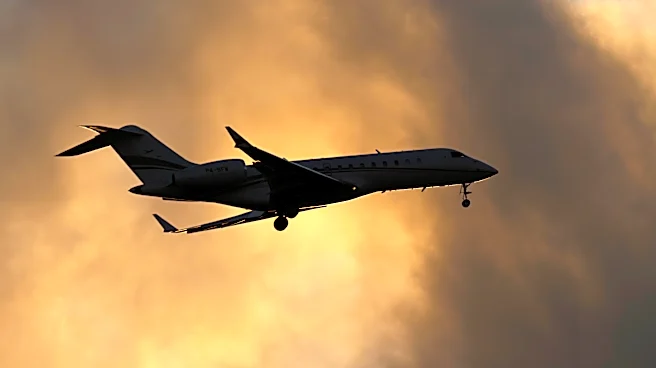
President Trump announced on his Truth Social account that Canada-based airplane manufacturer Bombardier will be barred from selling in the United States unless it establishes manufacturing operations within the country. This declaration comes amidst
escalating trade disputes between Washington and Canada. The White House has not yet detailed how this action would be enforced or the specific steps the president intends to take. Bombardier Defense, which has a significant presence in Wichita, Kansas, prepares planes for special mission purposes. The company emphasizes that its aircraft incorporate American-made components, including engines and avionics, sourced from approximately 2,800 American companies across 47 states. Bombardier states it invests over $2.5 billion annually with its suppliers, highlighting its deep integration into the U.S. economy and its historical ties to the business jet industry through Learjet innovations in Wichita.
Why It's Important?
This potential ban could significantly impact Bombardier's operations and sales within the U.S. market, potentially forcing the company to reconsider its manufacturing strategy. For the U.S. economy, particularly the aerospace sector, such a move could lead to increased domestic manufacturing jobs if Bombardier complies, but it also risks disrupting existing supply chains and trade relationships. Senator Jerry Moran of Kansas has already voiced concerns, emphasizing Bombardier's substantial contribution to the Kansas workforce and the nation's defense and aerospace capabilities. He has engaged with the Trump administration to highlight the company's importance to Kansas workers and its supply chain. The situation underscores the administration's focus on domestic production and its willingness to use trade policy to achieve these goals, potentially setting a precedent for other foreign companies operating in the U.S. market.
What's Next?
The immediate next steps involve the White House clarifying the enforcement mechanisms and specific conditions under which Bombardier would be barred from U.S. sales. Bombardier will likely need to evaluate its options, which could include establishing new manufacturing facilities in the U.S. or engaging in negotiations with the administration to find an alternative solution. Senator Moran has indicated he will continue to advocate for Bombardier's manufacturing operations to remain and grow in Kansas, suggesting ongoing political pressure and discussions. Other U.S. lawmakers and industry stakeholders may also weigh in as the implications of this potential policy become clearer. The broader trade dispute between the U.S. and Canada will also be a critical backdrop, potentially influencing the resolution of this specific issue.
Beyond the Headlines
This development highlights a broader trend of economic nationalism and protectionist trade policies under the Trump administration, aiming to incentivize domestic manufacturing and job creation. It raises questions about the future of global supply chains and the potential for other multinational corporations to face similar demands. The emphasis on 'American-made' components, while beneficial for U.S. suppliers, could also lead to increased costs or complexities for companies like Bombardier. Furthermore, the use of social media platforms like Truth Social for significant policy announcements bypasses traditional communication channels, reflecting a shift in how presidential directives are conveyed and potentially impacting their immediate interpretation and implementation. The situation also underscores the delicate balance between international trade relations and domestic economic priorities.