






What's Happening?
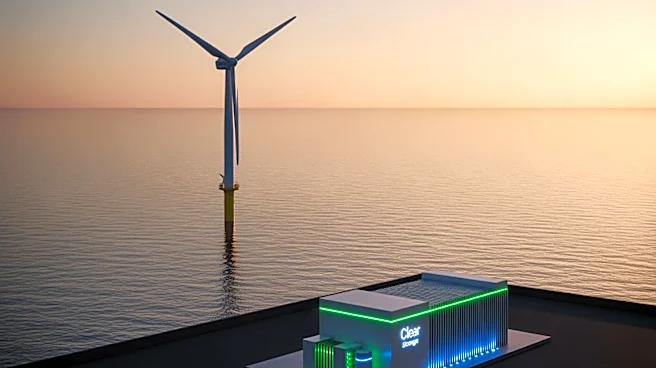
A report by UK energy consultancy Xodus and Subsea 7 highlights the urgent need for co-located offshore storage to prevent the waste of hundreds of terawatt-hours of electricity and billions in public funds annually. As offshore wind capacity in Europe
expands, grid infrastructure struggles to keep pace, potentially leading to significant power curtailment. The report suggests that without intervention, curtailment could exceed 300 terawatt-hours by 2040. The proposed solution involves deploying offshore-adapted lithium-ion batteries and transitioning to long-duration storage to manage grid constraints. This approach aims to complement grid upgrades and enhance energy security.
Why It's Important?
The findings underscore the critical role of energy storage in maximizing the efficiency and economic viability of offshore wind power. As countries strive to meet renewable energy targets, the ability to store and dispatch wind-generated electricity is essential for reducing waste and ensuring a stable energy supply. The report's recommendations could influence policy reforms and investment strategies, encouraging the integration of storage solutions with offshore wind infrastructure. This development is significant for stakeholders in the renewable energy sector, as it presents opportunities for innovation and commercial growth.
What's Next?
The report calls for policy reforms, including changes to the UK's contracts for difference model, to incentivize storage use and discourage power curtailment. As the offshore wind sector evolves, stakeholders will need to address technological, commercial, and regulatory challenges to implement effective storage solutions. The anticipated decrease in capital expenditure for storage technologies by 2040 could further drive adoption and integration, supporting the transition to a more sustainable energy system.