







What's Happening?
Middle Eastern oil producers are gearing up for the potential resumption of exports through the Strait of Hormuz following a two-week ceasefire between the U.S. and Iran. Saudi Aramco and other regional producers have asked Asian refiners to submit crude
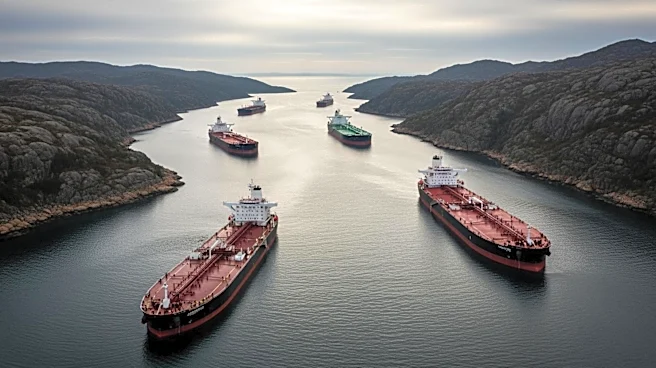
oil loading programs for April and May, anticipating the reopening of the critical waterway. Despite the ceasefire, Iran has yet to lift its blockade, which has driven up energy prices globally. The situation remains uncertain, with attacks on Saudi energy facilities reducing production capacity and throughput on key pipelines. Asian refiners and trading firms are actively seeking tankers to load crude from within the Gulf, highlighting the ongoing demand for Middle Eastern oil.
Why It's Important?
The potential reopening of the Strait of Hormuz is crucial for global energy markets, as the waterway is a major transit route for oil and liquefied natural gas. The blockade has disrupted supply chains and increased energy prices, impacting economies worldwide. The resumption of exports would alleviate some of these pressures, but the situation remains volatile. The ongoing conflict and attacks on energy infrastructure underscore the fragility of global energy security and the need for diversified supply routes. The developments in the Middle East could have long-term implications for energy trade and geopolitical dynamics, particularly for countries reliant on Gulf oil.
What's Next?
The success of the ceasefire and the reopening of the Strait of Hormuz will be critical in stabilizing energy markets. Middle Eastern producers are preparing for increased exports, but the situation remains uncertain due to ongoing geopolitical tensions. The outcome of peace talks and Iran's willingness to lift the blockade will determine the future of energy trade in the region. Countries and companies involved in the oil trade will need to navigate these complexities to ensure supply security and manage price volatility.