





What's Happening?
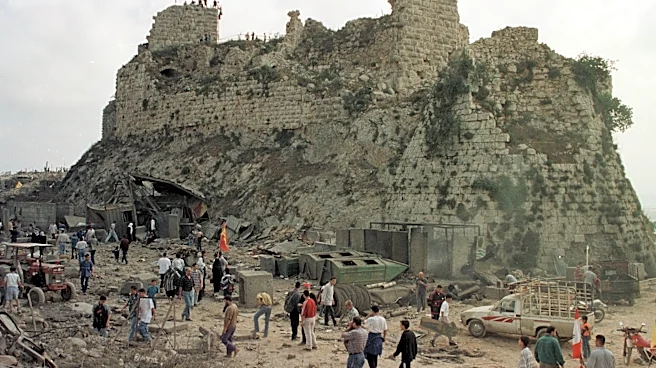
The Israeli Defense Forces (IDF) have captured Beaufort Castle in southern Lebanon, marking a significant development in their ongoing military operations against Hezbollah. The operation, involving multiple IDF brigades, aims to secure the Beaufort ridge
and Wadi Saluki areas, which are strategic locations due to their proximity to the Israeli border and their use by Hezbollah. The IDF's actions are part of a broader campaign to neutralize threats to the Galilee Panhandle and Metula. The capture of Beaufort Castle, a site with historical military significance, underscores the IDF's readiness to expand its operations if necessary.
Why It's Important?
The capture of Beaufort Castle is a strategic victory for Israel, as it disrupts Hezbollah's operations in a key area. This move could potentially weaken Hezbollah's military capabilities and reduce the threat to Israeli border communities. The operation also highlights Israel's commitment to maintaining security and stability in the region. However, the expansion of military operations could lead to increased tensions and potential escalation of conflict, affecting regional stability and international relations. The situation is closely monitored by global powers, including the U.S., which may influence diplomatic and military strategies in the Middle East.
What's Next?
The IDF may continue to consolidate its position in southern Lebanon, potentially expanding operations to further weaken Hezbollah's infrastructure. This could involve additional ground and air strikes, as well as increased coordination with international allies. The situation remains dynamic, with potential for both escalation and diplomatic resolution. The international community, including the U.S., may play a role in mediating the conflict and supporting efforts to stabilize the region. The outcome of these operations will have significant implications for regional security and international diplomatic efforts.