








What's Happening?
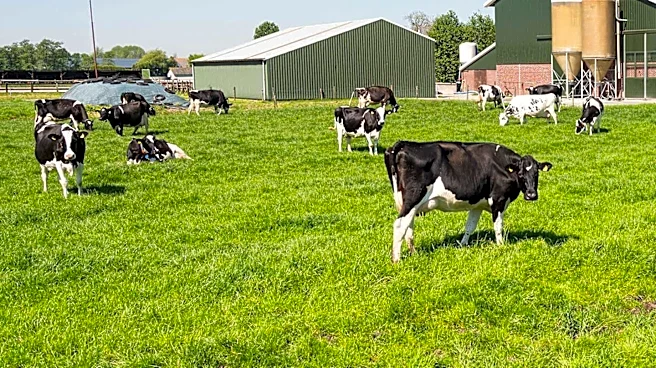
Dairy farms are experiencing increased stocking densities as producers aim to boost revenue by keeping more cows for beef production. This trend is putting pressure on existing manure handling and bedding systems, which may not be designed to accommodate
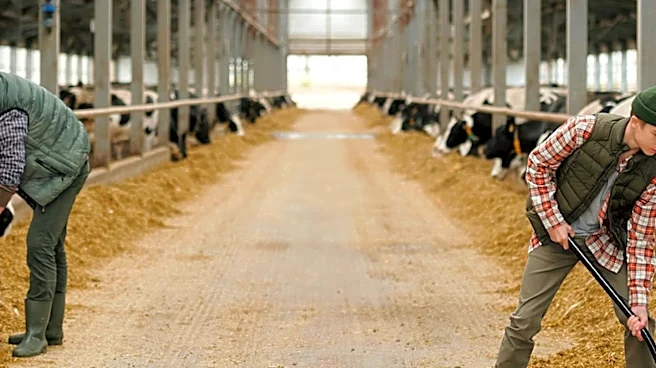
the higher volumes of manure and bedding required. Each cow produces approximately 2 to 2.6 cubic feet of manure daily, making storage capacity a critical constraint. As herd sizes grow, the need for efficient manure management becomes more pressing, requiring adjustments in equipment schedules and stall maintenance to ensure cleanliness and cow comfort.
Why It's Important?
The increase in stocking density on dairy farms has significant implications for farm operations and environmental management. Efficient manure management is crucial to prevent environmental pollution and maintain farm sustainability. The additional labor and equipment demands associated with higher stocking densities can increase operational costs, impacting farm profitability. Moreover, maintaining cow comfort and health is essential for milk production, making effective stall and manure management a priority for dairy farmers. Addressing these challenges is vital to ensure the long-term viability of dairy operations.
What's Next?
Dairy farms may need to invest in upgraded manure management systems and adjust labor practices to handle the increased demands of higher stocking densities. This could involve adopting new technologies or expanding existing infrastructure to improve efficiency. Additionally, farms may explore alternative bedding materials or recycling options to manage costs. As the industry adapts to these changes, ongoing evaluation of herd management practices will be necessary to optimize operations and maintain environmental compliance.