







What's Happening?
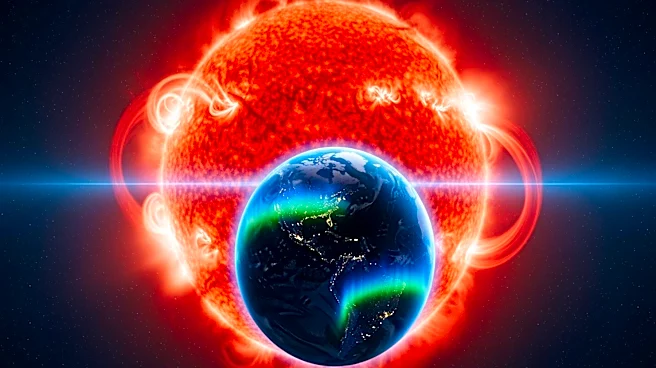
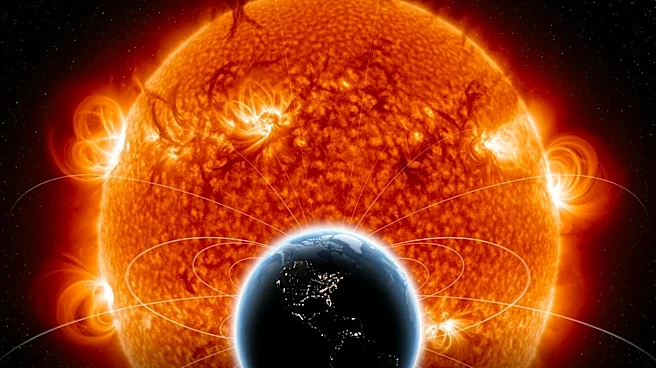
A rare 'cannibal' solar storm is heading towards Earth, potentially creating a spectacular display of the Northern Lights in areas that typically do not experience them. This phenomenon began on June 2 when sunspot 4455 on the sun's surface became volatile,
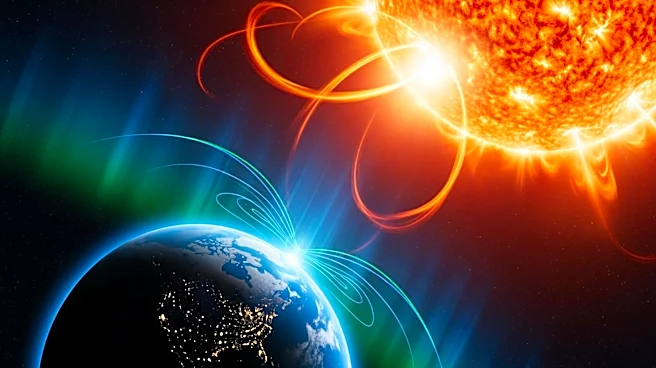
leading to a series of powerful X-class solar flares. These flares are among the most intense solar eruptions recorded. The sun also emitted several coronal mass ejections (CMEs), which are massive clouds of magnetized plasma. A faster-moving CME overtook a slower one, merging to form what scientists call a 'cannibal CME'. This event is expected to reach Earth by late June 4 or early June 5, according to NASA researchers.
Why It's Important?
The approaching solar storm could have significant implications for both natural phenomena and technological systems. The U.S. National Oceanic and Atmospheric Administration has issued a watch for a strong G3 geomagnetic storm, with the potential to escalate to a severe G4 event. This could result in more intense auroras visible much farther south than usual, providing a rare opportunity for millions to witness the Northern Lights. However, the storm could also cause minor technological disruptions, such as brief radio blackouts and increased atmospheric drag on satellites. Despite these potential issues, the storm is not expected to pose any danger to people or ground-based infrastructure.
What's Next?
As the solar storm approaches, forecasters recommend that those interested in viewing the auroras find dark areas away from city lights and keep an eye on local aurora forecasts for optimal viewing conditions. Meanwhile, scientists and technology operators will likely monitor the storm's impact on communication systems and satellites closely. The event underscores the importance of understanding solar activity and its potential effects on Earth, prompting ongoing research and preparedness measures for future solar events.