






What's Happening?
On April 24, Russia and Ukraine conducted a prisoner of war swap, exchanging 193 captured personnel each. This exchange is part of ongoing efforts to manage the humanitarian aspects of the conflict in the Donbas region. The swap included personnel from
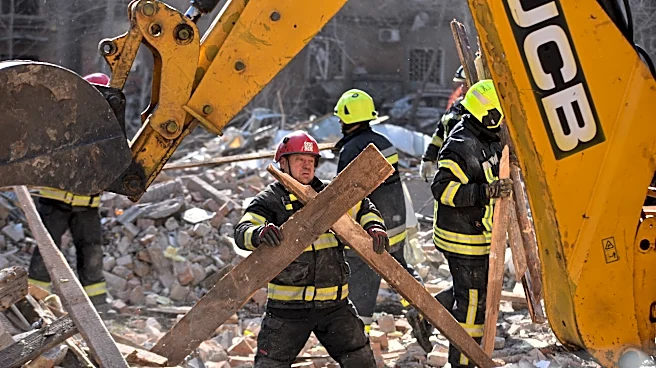
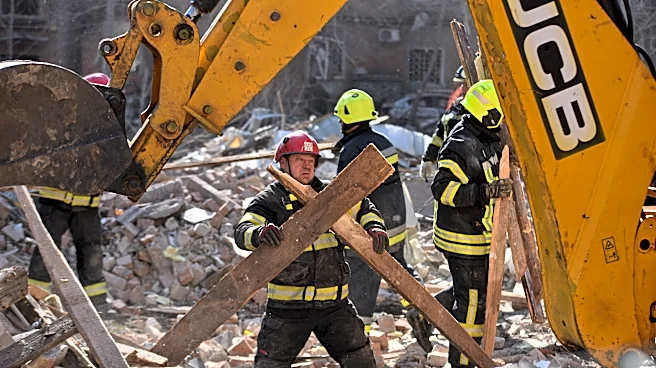
various Ukrainian forces, such as the Armed Forces, National Guard, and State Border Guard Service. The exchange follows previous agreements and is part of a series of swaps that began earlier in April. Additionally, the Ukrainian military has been active in targeting Russian military infrastructure, including a drone factory in Rostov Oblast, which was reportedly destroyed by Ukrainian Neptune missiles. The conflict continues to impact civilian areas, with recent Russian strikes on Odesa resulting in casualties and damage to residential buildings.
Why It's Important?
The prisoner swap highlights the ongoing humanitarian concerns in the conflict between Russia and Ukraine, particularly in the Donbas region. It underscores the complex nature of the conflict, where military engagements are intertwined with efforts to address the plight of captured soldiers. The destruction of Russian military infrastructure by Ukrainian forces indicates a strategic effort to weaken Russia's military capabilities, potentially altering the dynamics of the conflict. The continued attacks on civilian areas, such as the recent strikes on Odesa, emphasize the ongoing risks to civilian lives and infrastructure, raising concerns about the humanitarian impact and the need for international attention and intervention.
What's Next?
The conflict in the Donbas region is likely to continue, with both military and diplomatic efforts playing crucial roles. The international community may increase its involvement in facilitating further prisoner exchanges and addressing humanitarian needs. The destruction of military infrastructure could lead to retaliatory actions, potentially escalating the conflict. Monitoring the situation will be essential to understand the evolving military strategies and their implications for regional stability. Additionally, the humanitarian impact of the conflict may prompt further international aid and support for affected civilians.
Beyond the Headlines
The ongoing conflict in the Donbas region has broader implications for international relations and security. It highlights the challenges of managing conflicts that involve significant humanitarian concerns and the complexities of international diplomacy. The situation also raises questions about the effectiveness of international law and conventions in protecting prisoners of war and civilians. The conflict's impact on global supply chains, particularly in critical minerals and energy, could have long-term economic implications. Furthermore, the conflict serves as a reminder of the geopolitical tensions in Eastern Europe and the potential for broader regional instability.