




What's Happening?
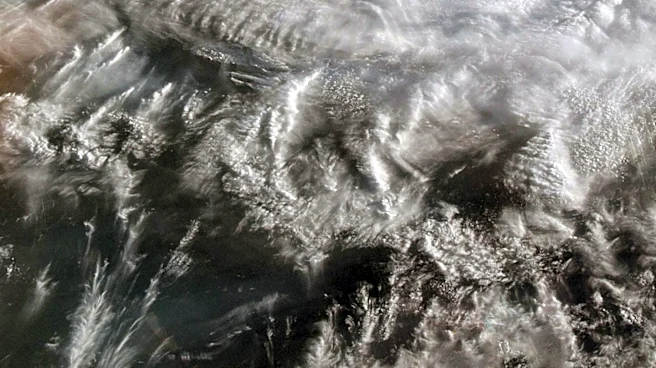
The city of Manaus, the largest urban center in the Brazilian Amazon, has closed its public schools due to severe smoke from hundreds of wildfires. This decision, announced on Friday, aims to protect the health and well-being of students and education
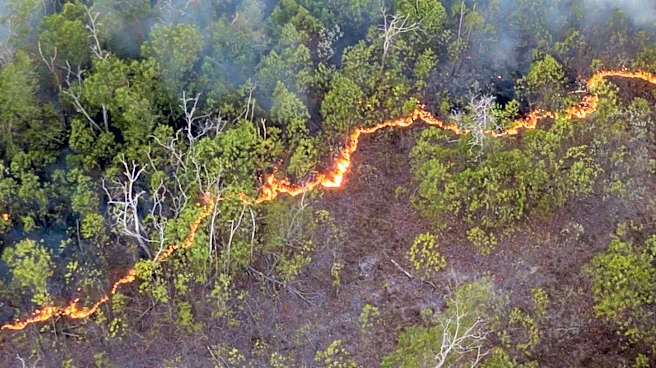
professionals. The region is currently experiencing an intensifying El Nino event, which is contributing to extreme weather conditions, including drought and increased wildfires in the north of Brazil. In September alone, the state of Amazonas recorded over 3,700 fire hotspots, a nearly fourfold increase compared to the previous year, according to satellite data from Brazil's National Institute for Space Research (INPE). On Wednesday, more than 749 fires were active, leading to poor air quality in Manaus, a city of 2.3 million residents. Temperatures in Manaus reached 40°C (104°F) on Thursday, and authorities have advised residents to avoid outdoor exercise. The city had previously experienced several days of smoke last month.
Why It's Important?
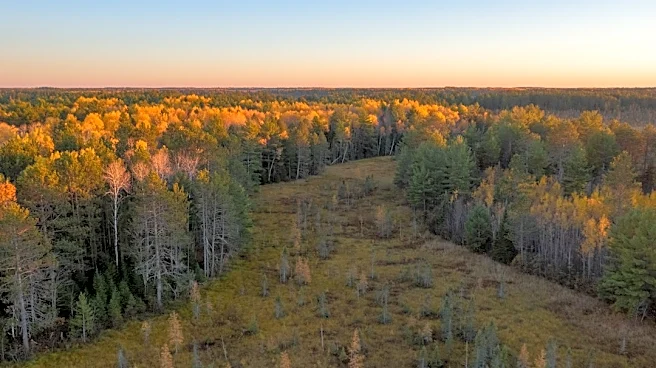
The widespread school closures in Manaus highlight the immediate and severe human impact of environmental crises, particularly in vulnerable regions like the Amazon. This event underscores the critical role of the Amazon rainforest as the world's largest tropical rainforest and a significant carbon sink, essential for mitigating global warming. The intensifying El Nino phenomenon, projected to be the strongest on record this year, is exacerbating weather extremes, leading to both increased drought and wildfires in the north and potential floods in the south of Brazil. This situation poses a direct threat to public health, as evidenced by the respiratory problems reported by residents due to smoke and heat. The disruption to education further illustrates the broader societal costs of climate-related disasters, affecting the daily lives and future prospects of millions. The incident serves as a stark reminder of the interconnectedness of global climate patterns and local environmental health.
What's Next?
Authorities in Manaus have not yet set a date for schools to reopen, indicating that the duration of the public health crisis due to wildfire smoke remains uncertain. The ongoing El Nino event is projected to peak in December, suggesting that the region may continue to experience extreme weather conditions, including drought and wildfires, for the foreseeable future. This could lead to prolonged periods of poor air quality and further disruptions to daily life and public services. The Brazilian government's warnings about increased rain and floods in the south, alongside drought and wildfires in the north, suggest a complex and challenging environmental landscape ahead. Monitoring efforts by organizations like Brazil's National Institute for Space Research (INPE) will be crucial in tracking the progression of fire hotspots and informing public safety measures. International attention and potential aid may also be directed towards the region as the environmental crisis unfolds.
Beyond the Headlines
The situation in Manaus extends beyond immediate public health concerns, touching upon deeper issues of climate resilience, environmental governance, and the global responsibility to protect critical ecosystems. The substantial increase in fire hotspots, despite efforts to restore environmental enforcement and monitoring under the current government, suggests the immense challenge posed by natural climate variations like El Nino. This event could trigger renewed debates on sustainable land management practices, the effectiveness of environmental protection policies, and the need for international cooperation in combating deforestation and climate change. The long-term health impacts of prolonged exposure to wildfire smoke, particularly on children, could lead to increased healthcare burdens and exacerbate existing social inequalities. Furthermore, the disruption to education could have lasting consequences on human capital development in the region, highlighting the cascading effects of environmental degradation on societal progress and stability.