
What's Happening?
Japan is undergoing a significant transformation in its defense strategy, moving away from its post-World War II pacifist stance. This shift is not a rearmament but an adaptation to the current security
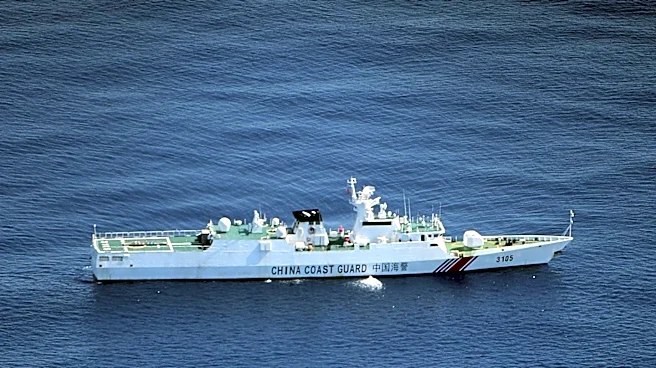
environment in the Indo-Pacific region. The Japanese Self-Defense Forces (SDF) are removing long-standing constraints, such as the ban on collective self-defense and the export of lethal weapons. This change is driven by increasing threats from China and North Korea, as well as concerns about the reliability of the United States as a security ally. Japan's National Defense Strategy has highlighted the need to reinforce its defense capabilities in response to these challenges. The country is acquiring new military capabilities, including long-range strike weapons and advanced fighter jets, and is increasing its defense budget.
Why It's Important?
Japan's shift in defense policy is significant for regional and global security dynamics. As China continues to expand its military presence and North Korea remains a nuclear threat, Japan's enhanced military capabilities could serve as a counterbalance in the region. This transformation also reflects Japan's desire to assert its role as a key player in regional security and to ensure its own national security amid uncertainties about U.S. commitment. The changes could lead to a stronger U.S.-Japan alliance, enhancing deterrence against potential aggressors. However, this shift may also provoke reactions from neighboring countries, particularly China and Russia, who have expressed concerns about a resurgence of Japanese militarism.
What's Next?
Japan is expected to continue its defense buildup, with plans to increase its defense spending to 2% of GDP by 2026. The country is also working on establishing a centralized intelligence agency and enhancing its joint operational capabilities with the United States. These developments will likely lead to closer military cooperation between Japan and the U.S., focusing on cybersecurity and operational planning. As Japan adapts to the new security environment, it will need to balance its defense ambitions with economic constraints, given its high debt-to-GDP ratio and aging population.