






What's Happening?
The Massachusetts Department of Transportation (MassDOT) and railroad company CSX have reached an agreement to implement rail upgrades in the Berkshires. This initiative aims to mitigate conflicts between freight trains and the state's ambition to expand
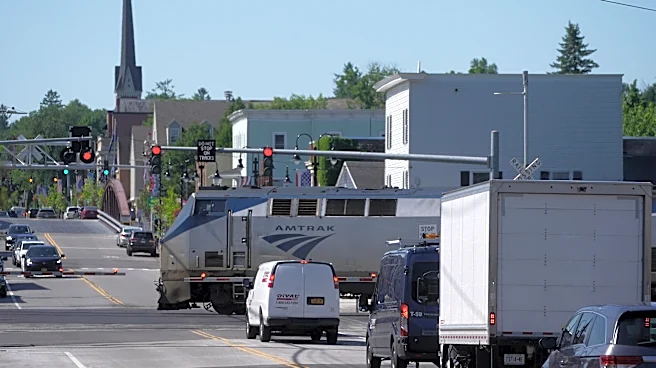
passenger rail services. The Healey administration announced that MassDOT will finance the construction of a new siding and other track improvements near Pittsfield to boost rail capacity. Additionally, the feasibility of a new platform at Pittsfield Station will be explored. These enhancements are intended to support the permanent seasonal weekend Berkshire Flyer service and lay the groundwork for broader passenger rail expansion in Western Massachusetts. While the agreement outlines MassDOT's commitments, the specific contributions from CSX were not detailed by the administration. The Berkshire Flyer service, which connects Pittsfield and New York City, has been operational since 2022, with Amtrak running the trains supported by MassDOT. The state is also progressing with plans to extend passenger service from Boston to Albany, New York, via the East-West Rail project, as part of its 'Compass Rail' vision for intercity passenger rail across Massachusetts.
Why It's Important?
This agreement is crucial for improving transportation infrastructure and connectivity in Western Massachusetts, with significant implications for regional economic development and resident mobility. Lieutenant Governor Kim Driscoll highlighted that enhanced transportation links, such as the Berkshire Flyer, attract more visitors, bolster local businesses, and provide residents with reliable travel options. The current passenger rail service has faced challenges, particularly with on-time performance, due to conflicts with freight trains on single-track sections of the CSX-owned corridor between Albany and Pittsfield. The planned upgrades, including a 3-mile siding track and a new track switch, are expected to increase corridor capacity, thereby improving the efficiency and reliability of both passenger and freight services. This investment underscores the state's commitment to a comprehensive passenger rail network, which could reduce reliance on road travel, decrease carbon emissions, and stimulate economic growth in communities along the rail lines by making them more accessible to tourists and commuters alike. The project also addresses long-standing issues of rail capacity that have hindered the expansion of passenger services.
What's Next?
MassDOT has allocated $31 million for the Pittsfield track capacity project in its latest capital plan, indicating that the construction of the new siding and other track improvements will proceed. The department's planning previously identified that these additions would yield operational benefits by increasing corridor capacity. The next steps will likely involve detailed engineering and design work, followed by the commencement of construction. The exploration of a new platform at Pittsfield Station will also move forward, potentially leading to further infrastructure development. Stakeholders, including local businesses and residents in Pittsfield, will be closely watching the progress of these upgrades, as they are expected to enhance the city's connectivity to New York City and potentially other major hubs. The success of these initial upgrades could also influence the pace and scope of the broader East-West Rail project, which aims to connect Boston, Worcester, Springfield, and Pittsfield to Albany, New York, further integrating Western Massachusetts into a larger regional transportation network.
Beyond the Headlines
The agreement between MassDOT and CSX extends beyond immediate operational improvements, signaling a strategic shift towards prioritizing and integrating passenger rail within a freight-dominated rail network. This collaboration highlights the complex negotiations often required between public entities and private railroad companies to achieve shared infrastructure goals. The investment in rail capacity not only addresses current service reliability issues but also anticipates future demand for passenger rail, reflecting a long-term vision for sustainable transportation in Massachusetts. The 'Compass Rail' initiative, of which this project is a part, represents a broader commitment to regional equity and economic development, aiming to connect historically underserved areas with major economic centers. This could lead to significant demographic and economic shifts in Western Massachusetts, potentially attracting new residents and businesses seeking improved transit options. Furthermore, the project sets a precedent for how states can leverage existing freight rail infrastructure to expand passenger services, offering a model for other regions facing similar challenges in balancing freight and passenger rail needs.