
What's Happening?
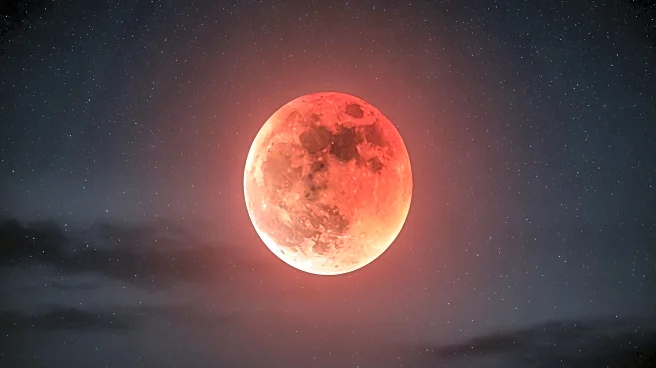
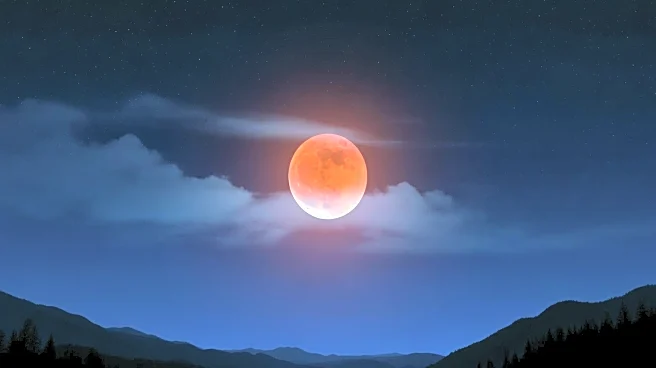
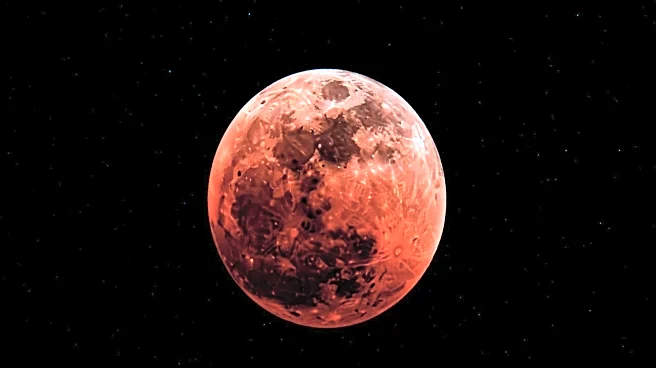
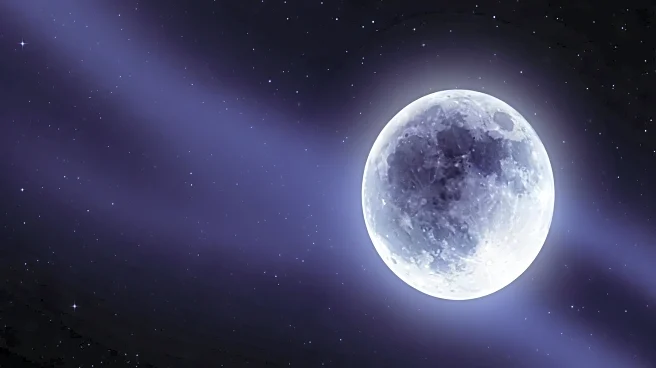
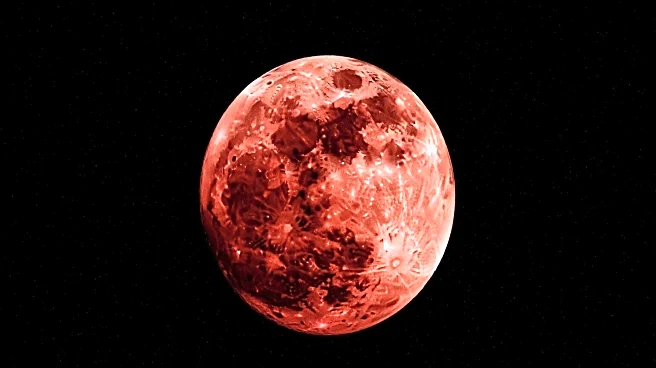
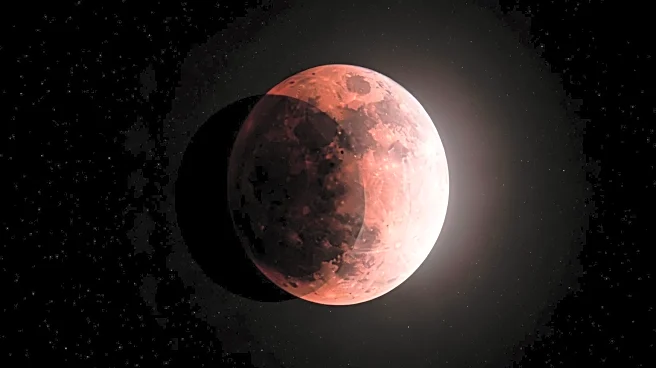
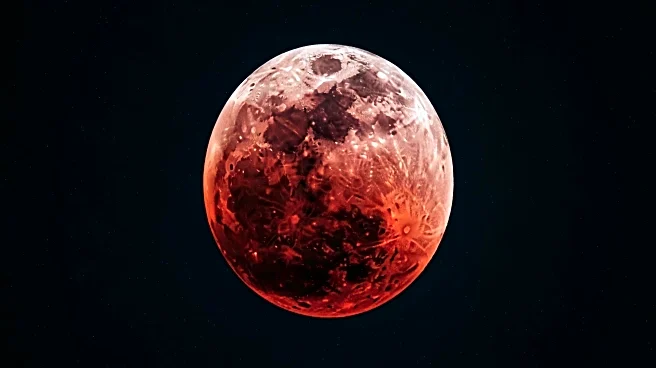
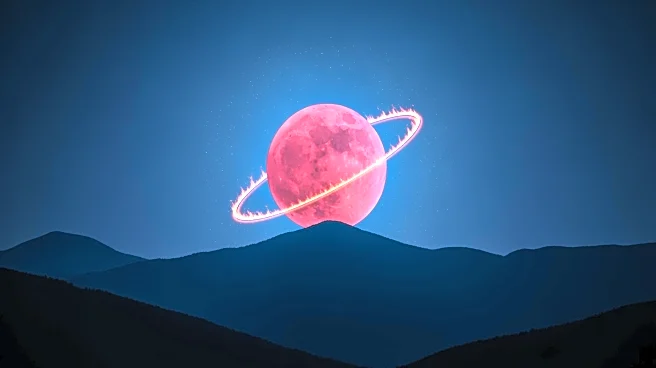
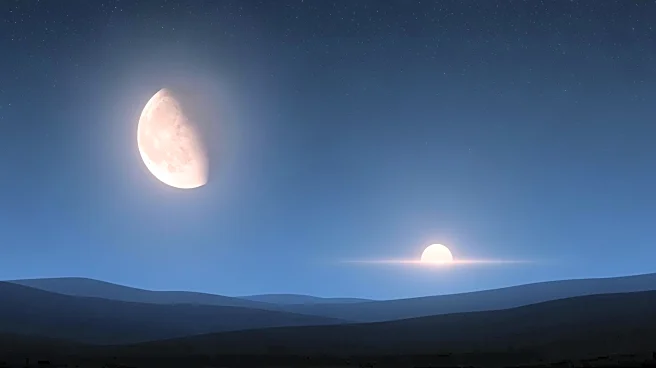
On March 3, 2026, a total lunar eclipse occurred, captivating skywatchers worldwide as the moon entered Earth's umbral shadow, transforming into a 'blood moon' with a deep crimson hue. This celestial event was visible across large parts of the Americas,
Asia, and Oceania. During a total lunar eclipse, Earth positions itself between the sun and the moon, blocking direct sunlight from reaching the lunar surface. Instead, the moon is illuminated by sunlight filtered through Earth's atmosphere, which scatters blue light and allows red wavelengths to pass, giving the moon its characteristic red color. Photographers from various locations, including New Zealand, the Philippines, and China, captured breathtaking images of the eclipse, showcasing the moon's transformation and the intricate play of light and shadow.
Why It's Important?
The total lunar eclipse of 2026 serves as a reminder of the intricate dynamics of our solar system and the beauty of celestial events. Such occurrences offer opportunities for scientific observation and public engagement with astronomy. They highlight the importance of understanding orbital mechanics and atmospheric science, as the phenomena involved in eclipses are directly related to these fields. For the public, these events foster a sense of wonder and curiosity about the universe, potentially inspiring future generations to pursue careers in science and technology. Additionally, the widespread interest in such events underscores the global nature of scientific phenomena, transcending cultural and geographical boundaries.
What's Next?
The next total lunar eclipse is expected to occur on New Year's Eve 2028, providing another opportunity for skywatchers to witness this awe-inspiring event. Meanwhile, a total solar eclipse is scheduled for August 12, 2026, with the path of totality crossing Greenland, Iceland, and Spain. These upcoming eclipses will continue to draw attention from both amateur and professional astronomers, as well as the general public. Preparations for these events may include public viewing parties, educational programs, and scientific studies aimed at further understanding the effects of eclipses on Earth's atmosphere and the behavior of celestial bodies.