







What's Happening?
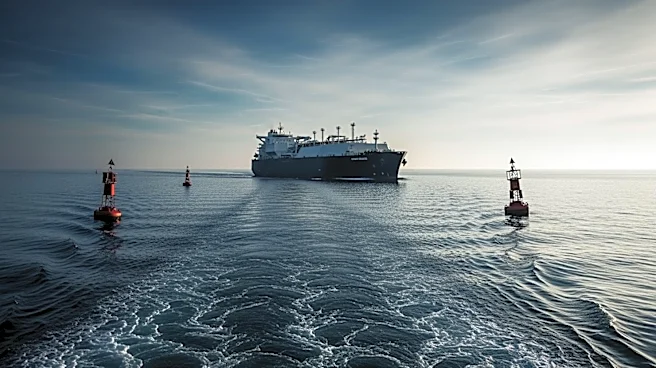
A third Qatari liquefied natural gas (LNG) tanker, Al Sahla, is transiting the Strait of Hormuz, heading to China's Tianjin LNG terminal. This transit occurs nearly two weeks after the first such cargo passed through the strait under an Iran-Pakistan
arrangement. The previous two tankers were sold to Pakistan under a government-to-government deal, with Iran approving the shipments to build confidence between Qatar and Pakistan, which is mediating peace talks. Qatar, the world's second-largest LNG exporter, has seen its export capacity significantly reduced due to Iranian attacks that destroyed 17% of its capacity. Repairs are expected to take three to five years.
Why It's Important?
The transit of Qatari LNG tankers through the Strait of Hormuz is crucial for global energy markets, as the strait is a vital chokepoint for oil and gas shipments. The ongoing conflict has disrupted these shipments, impacting global LNG supply and prices. Qatar's ability to continue exporting LNG is vital for maintaining energy security, particularly for Asian markets that rely heavily on these imports. The situation also highlights the geopolitical complexities of the region, where energy resources are intertwined with diplomatic and military tensions.
What's Next?
The continuation of LNG shipments through the Strait of Hormuz will depend on the progress of peace negotiations between the U.S. and Iran, mediated by Qatar and Pakistan. Any resolution could lead to the reopening of trade routes and stabilization of energy markets. However, the potential for further conflict remains, which could disrupt shipments and impact global energy supplies. Stakeholders, including energy companies and importing countries, will be closely monitoring the situation for any developments that could affect supply chains and market stability.