







What's Happening?
A new report from the Peterson Institute for International Economics (PIIE) highlights the critical need for closer cooperation between economists and military strategists to effectively wage and win long-term conflicts. The report, titled 'Why generals
need economists to win long wars,' challenges traditional assumptions about economic power translating directly into military success. It points out that while the non-U.S. NATO GDP significantly dwarfs Russia's, Russia's military spending at purchasing power parity is comparable to that of the European Union and the United Kingdom. The analysis also notes that Iran, despite its economy being a fraction of the United States', has managed to tie down U.S. forces and disrupt global energy markets. This disparity underscores that economic size alone does not guarantee military advantage, especially in prolonged, attritional, or asymmetric warfare. The report proposes a new research agenda focusing on four key building blocks: generating resources, converting resources into military capabilities, denying resources to an adversary, and maintaining political power.
Why It's Important?
This perspective is crucial for U.S. national security and defense policy, as it suggests that simply increasing defense spending or relying on aggregate GDP may not be sufficient to deter or win protracted conflicts. The U.S. and its allies, who are committing trillions to military capabilities, must instead focus on how that spending translates into deployable capabilities and battlefield effectiveness. The report emphasizes that economic management must be an integral part of military strategy, not merely a backdrop. Understanding how to mobilize funding and labor, adapt technology, and conduct economic warfare effectively can determine the duration and outcome of conflicts. For instance, the report notes that over 40% of components in Russian weapons used in Ukraine came from four American suppliers, highlighting a critical pressure point for economic warfare. This shift in understanding could lead to significant changes in how the U.S. military and government approach defense planning, resource allocation, and international alliances, potentially impacting defense industries and technological development.
What's Next?
The PIIE report advocates for a renewed focus on the economics of war within both economic and defense studies. This could lead to increased collaboration between economists and military specialists in policy-making and strategic planning within the U.S. government and its allies. The proposed research agenda, which includes examining war finance, technological adaptation, economic warfare, and the political constraints on power, suggests that future defense strategies will need to integrate these economic considerations more deeply. This might involve re-evaluating supply chains, investing in more adaptable military production, and developing more sophisticated economic warfare tactics. The insights could also influence how the U.S. provides aid to allies, ensuring that support effectively converts into sustained fighting power, as seen in Ukraine's ability to leverage allied aid, contrasting with the less effective U.S. spending in Afghanistan.
Beyond the Headlines
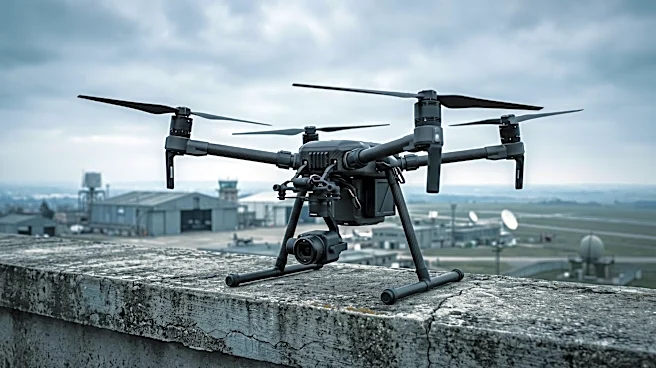
The report's emphasis on the 'long war' paradigm and asymmetric conflicts highlights a fundamental shift in modern warfare, moving beyond conventional military might to encompass economic resilience and strategic resource management. This has profound implications for the U.S., suggesting that national security is increasingly intertwined with economic policy, industrial capacity, and even public narrative management. The ethical dimension of economic warfare, such as sanctions and their impact on civilian populations, also comes into sharper focus. Furthermore, the report implicitly questions the efficacy of traditional defense procurement models, which often favor expensive, highly sophisticated equipment, in an era where cheaper, rapidly adaptable technologies (like drones) can play a decisive role. This could trigger a re-evaluation of the defense industrial base, encouraging innovation and competition beyond established contractors. The ability of a government to maintain public and elite support, even at the expense of broader economic well-being, is also identified as a critical factor in sustaining long wars, adding a complex political dimension to military strategy.