


What's Happening?
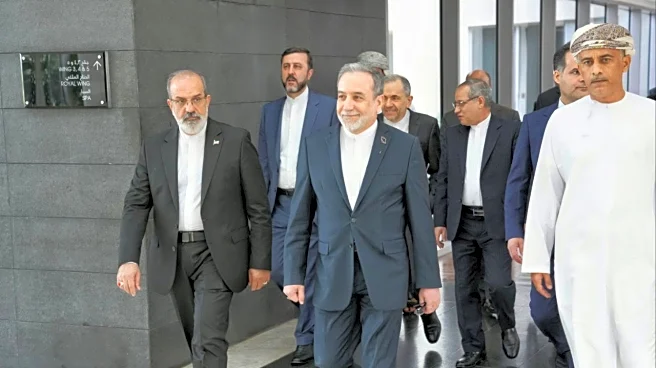
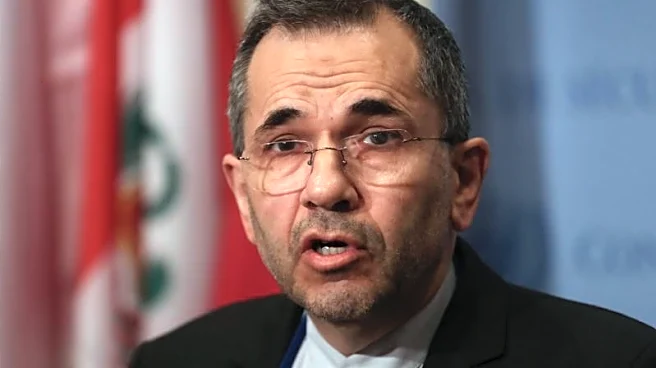
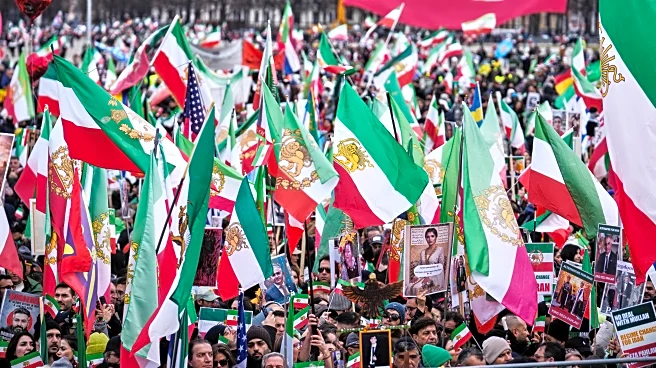
The second round of indirect talks between the United States and Iran is scheduled to take place on Tuesday in Geneva. This development follows recent mass protests against the Iranian regime in Germany. According to a senior Iranian official, Tehran
is open to discussing a settlement regarding its nuclear program, contingent upon the inclusion of sanctions in the discussions. However, the official emphasized that the topic of zero uranium enrichment is not open for negotiation. These talks are part of ongoing efforts to address longstanding tensions over Iran's nuclear ambitions and the international sanctions imposed on the country.
Why It's Important?
The resumption of indirect talks between the U.S. and Iran is significant as it represents a potential step towards easing tensions that have persisted for years. The outcome of these discussions could have substantial implications for international relations and regional stability in the Middle East. A successful negotiation could lead to the lifting of some sanctions on Iran, which would impact global oil markets and economic conditions in the region. Conversely, failure to reach an agreement could exacerbate existing tensions and lead to further geopolitical instability. The talks are closely watched by global powers and stakeholders invested in Middle Eastern peace and security.
What's Next?
As the talks proceed, the international community will be observing closely for any signs of progress or setbacks. Key stakeholders, including European nations and regional allies, may respond with diplomatic initiatives or adjustments in their foreign policy strategies based on the outcomes. The U.S. and Iran will likely continue to navigate complex diplomatic channels to address mutual concerns, with potential implications for future negotiations on broader issues such as regional security and economic cooperation.