




What's Happening?
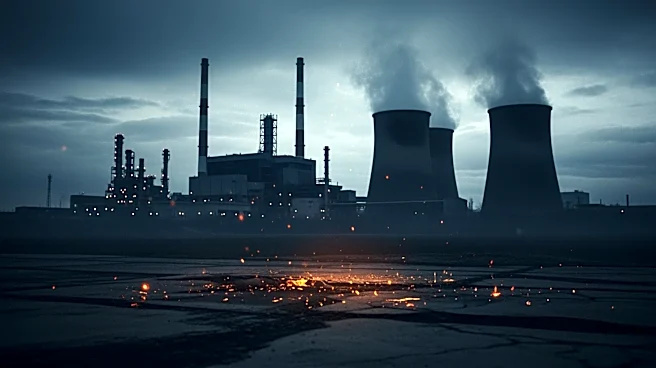
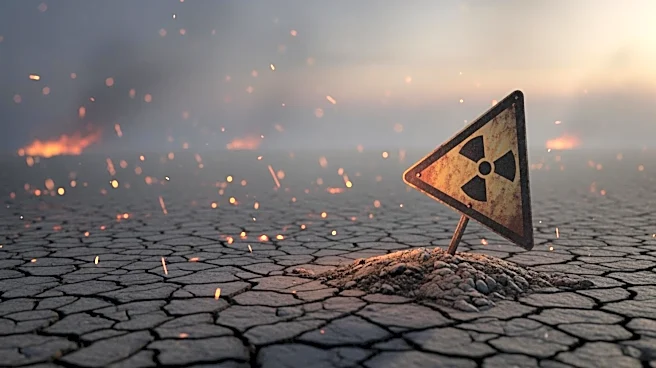
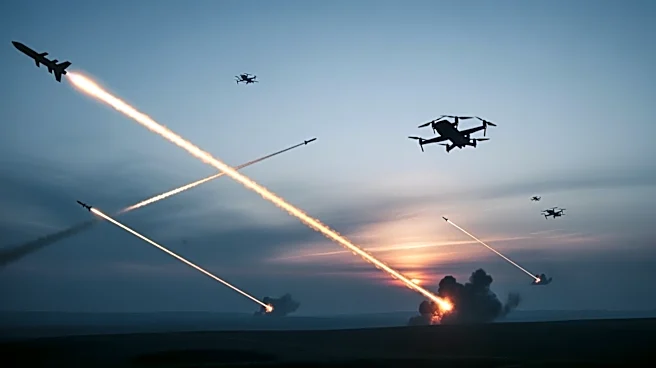
On the 40th anniversary of the Chernobyl nuclear disaster, strikes across Ukraine, Russia, and Russian-occupied territories have resulted in at least 16 fatalities. The attacks have raised concerns about the risks posed by military actions near the Chernobyl plant.
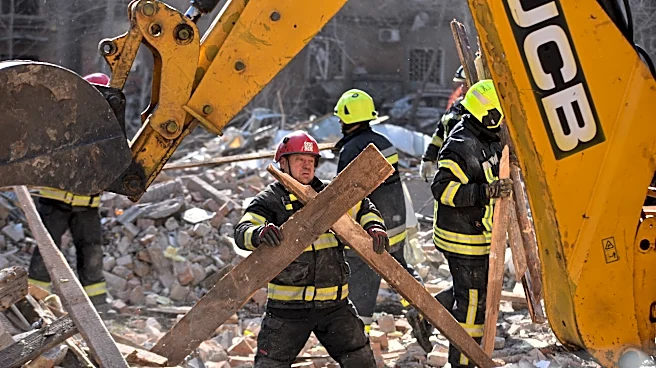
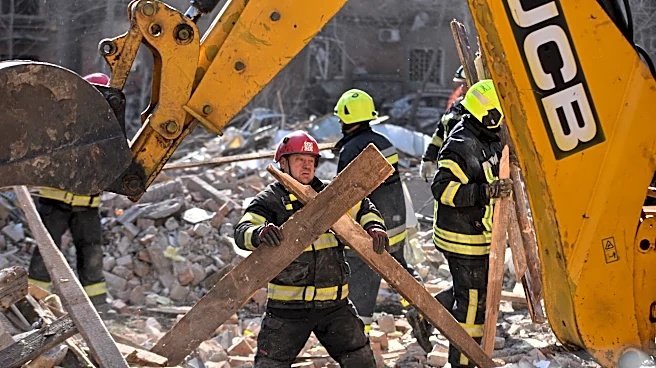
In Dnipro, Ukraine, Russian drone and missile strikes have killed nine people, according to regional head Oleksandr Hanzha. Additionally, a Ukrainian drone strike in Sevastopol, Crimea, resulted in one death, as reported by Moscow-installed authorities. The conflict has also seen Ukrainian forces targeting an oil refinery in Yaroslavl, Russia, causing fires at the facility. Ukrainian President Volodymyr Zelensky has warned of the potential for a man-made disaster due to these attacks, emphasizing the need for international intervention to prevent further nuclear risks.
Why It's Important?
The ongoing conflict and recent strikes highlight the persistent volatility in the region, with significant implications for international security and nuclear safety. The attacks near the Chernobyl site underscore the potential for catastrophic consequences if military actions compromise nuclear facilities. This situation poses a threat not only to regional stability but also to global safety, as any nuclear incident could have far-reaching environmental and health impacts. The involvement of international bodies like the International Atomic Energy Agency (IAEA) in assessing and addressing the damage is crucial to mitigating these risks. Furthermore, the conflict's escalation could lead to increased geopolitical tensions, affecting international relations and economic stability.
What's Next?
The international community, including organizations like the IAEA, is likely to increase pressure on Russia to halt military actions near nuclear sites. Repair efforts for the damaged Chernobyl structures are expected to be prioritized, with significant financial investments required. Diplomatic efforts may intensify to address the broader conflict and prevent further escalation. Additionally, the situation may prompt discussions on enhancing global nuclear safety protocols and emergency response strategies to prevent similar risks in conflict zones.