






What's Happening?
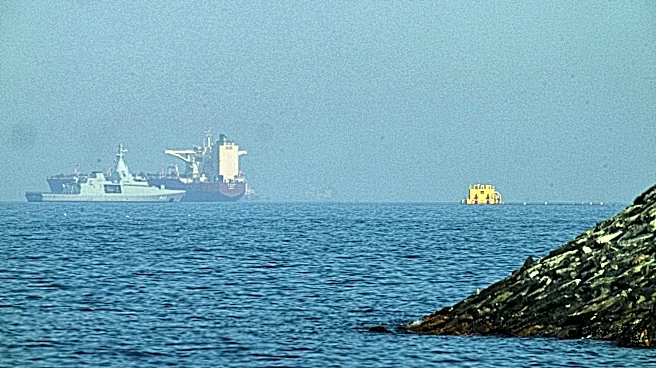
The U.S. Department of the Treasury has announced a new initiative called 'Economic Fury' aimed at tightening economic controls on Iran. This includes additional sanctions and warnings to the shipping industry about the risks of paying tolls for passage
through the Strait of Hormuz. The Treasury's Office of Foreign Asset Control (OFAC) has highlighted the sanctions risks associated with making payments to the Iranian regime for safe passage. The initiative also targets Iranian financial networks and shadow banking facilitators. The Department of State has imposed new sanctions on a Chinese petroleum terminal operator linked to Iranian crude oil imports and designated two vessel management companies. These actions are part of a broader effort to disrupt Iran's financial networks and pressure the regime.
Why It's Important?
The expansion of sanctions and warnings to the shipping industry underscore the U.S. government's ongoing strategy to exert economic pressure on Iran. This move is significant as it aims to cut off financial resources that support Iran's military activities. The sanctions could impact global shipping operations, particularly those involving the Strait of Hormuz, a critical chokepoint for global oil transportation. Companies involved in shipping and financial transactions with Iran face increased scrutiny and potential penalties. The actions also reflect the U.S. administration's commitment to using economic tools to influence international relations and security dynamics.
What's Next?
The U.S. government is likely to continue monitoring and enforcing these sanctions, potentially expanding them to include more entities and individuals. Shipping companies and financial institutions will need to exercise caution and ensure compliance with U.S. regulations to avoid penalties. The international community may see increased tensions in the region, and stakeholders will be watching for any retaliatory measures from Iran. The situation could also influence global oil markets and trade routes, prompting businesses to reassess their strategies.