







What's Happening?
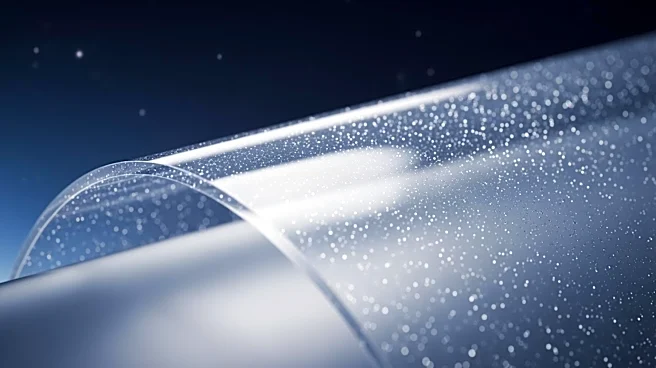
Scientists have developed a new material that is both thinner than a human hair and stretchy like rubber, designed to shield against harmful radiation in space. This innovative material, created by researchers at the Korea Institute of Science and Technology,
combines carbon and boron nitride nanotubes to block electromagnetic and neutron radiation. The material's lightweight and flexible nature makes it suitable for use in space technology, where radiation poses significant risks to both equipment and human health. The material can also be 3D-printed, allowing for versatile applications in space missions.
Why It's Important?
The development of this new material is a significant advancement in space technology, addressing the critical issue of radiation protection. Radiation is a major concern for space missions, affecting both the safety of astronauts and the functionality of space equipment. By providing effective shielding without adding significant weight, this material could enhance the safety and efficiency of space missions. It also has potential applications in other fields where radiation is a concern, such as medical devices and power plants, highlighting its broad impact on technology and safety.
What's Next?
The new material's potential for 3D printing opens up possibilities for customized radiation shielding solutions in space missions. As researchers continue to explore its applications, this material could become a standard component in the design of spacecraft and protective gear for space workers. Further testing and development may lead to its adoption in various industries, enhancing radiation protection across multiple sectors. The success of this material could also inspire further innovations in lightweight and flexible shielding technologies.